Harvest is in! 2018 Frozen Grape Must and Juice!
The Beautiful Red Mountain AVA of Washington
Each pail includes five and quarter gallons of grape juice. Product will arrive partially frozen.
Columbia Valley, Washington
Brix: 21.6, pH: 3.16, TA: .41
Harvested September 14th, 2018
We’re proud to offer our first Vin Gris this harvest. The Grenache Noir grapes (Tablas Creek Clone) were picked early to preserve freshness and acidity and then put immediately in the press to produce a delicate, lightly-colored juice. What separates the vin gris method from the traditional rosé method? There is practically zero maceration time. In France, “gris de gris” has to be made from lighter-tinted grapes like Gamay, Grenache, and Cinsault. Stainless steel/glass are preferable for fermentation and bulk aging, since Vin Gris has hyper-delicate qualities that could easily be overwhelmed by contact with oak.
You may wish to blend in another wine to add a rosé color. Scroll down a bit to our Instagram post showing the 2018 Grenache Vin Gris on the left, and the same wine with a small addition of Syrah for color on the right.
Why wouldn’t you make your own Vin Gris of Grenache Noir?
We’re offering our first Vin Gris of Grenache Noir.
We’re proud to offer our first Vin Gris this harvest. The Grenache Noir grapes (Tablas Creek Clone) were picked early to preserve freshness and acidity and then put immediately in the press to produce a delicate, lightly-colored juice. What separates the vin gris method from the traditional rosé method? There is practically zero maceration time.
Each pail includes five gallons of grape must. Product will arrive partially frozen.
Red Mountain, Washington
Brix: 25.9, pH: 3.79, TA: 4.0 g/L
Harvested October 22nd, 2022
“The Red Mountain AVA is located on a southwest-facing slope in south central Washington, a three and one-half hour drive from Seattle or Portland. At 4040 acres (1,635 hectares), this is the smallest, warmest wine-grape growing region in Washington. It has a unique combination of diverse geology, gentle south slope, consistent winds and notable heat profile. A complex mixture of the most rare and highly valued soil types in Washington was created by wind-blown silt and sand over glacial outflow. ” – Red Mountain Alliance
The Syrah is clone 877 (the more tannic of the Syrah clones) planted in 2016 on the ideal southwest-facing slope of a canyon in the middle of Red Mountain.
Red Mountain is famed for its powerful, tannic red wines of immense concentration. The grapes are the most sought after (expensive) fruit in the entire state and have produced three of the only wines to ever receive a perfect 100–point score from Robert Parker’s Wine advocate.
Each pail includes five gallons of grape must. Product will arrive partially frozen.
Red Mountain, Washington
Brix: 26.5, pH:3.62, TA: .54
Harvested September 12th, 2018
Our Merlot vines were planted in 1991, ten years before Red Mountain became an AVA, making them some of the oldest vines on the mountain. They’re located in the heart of the AVA , right off Sunset Road between the historic Kiona Estate and the famed Ciel du Cheval wineries.
“The Red Mountain AVA is located on a southwest-facing slope in south central Washington, a three and one-half hour drive from Seattle or Portland. At 4040 acres (1,635 hectares), this is the smallest, warmest wine-grape growing region in Washington. It has a unique combination of diverse geology, gentle south slope, consistent winds and notable heat profile. A complex mixture of the most rare and highly-valued soil types in Washington was created by wind-blown silt and sand over glacial outflow. ” – Red Mountain Alliance
Red Mountain is famed for its powerful, tannic red wines of immense concentration. The grapes are the most sought after (expensive) fruit in the entire state and have produced three of the only wines to ever receive a perfect 100-point score from Robert Parker’s Wine advocate.
Each pail includes five gallons of grape must. Product will arrive partially frozen.
Red Mountain, Washington
Brix: 26.3, pH:3.56, TA: .57
Harvested September 26th, 2018
Our Cabernet Franc is self rooted Clone 1, planted 6’ x 4’ spacing (1815 vines/acre) and the rows are oriented 20 degrees NNE-SSW to optimize light exposure throughout the day. The planting is so dense (a la Bordeaux) the vineyard had to buy a special tractor to fit between the rows. They’re located in the heart of the AVA , right off Sunset Road between the historic Kiona Estate and the famed Ciel du Cheval wineries.
“The Red Mountain AVA is located on a southwest-facing slope in south central Washington, a three and one-half hour drive from Seattle or Portland. At 4040 acres (1,635 hectares), this is the smallest, warmest wine-grape growing region in Washington. It has a unique combination of diverse geology, gentle south slope, consistent winds and notable heat profile. A complex mixture of the most rare and highly valued soil types in Washington was created by wind-blown silt and sand over glacial outflow. ” – Red Mountain Alliance
Red Mountain is famed for its powerful, tannic red wines of immense concentration. The grapes are the most sought after (expensive) fruit in the entire state and have produced three of the only wines to ever receive a perfect 100–point score from Robert Parker’s Wine advocate.
Do You love Right Bank Bordeaux?
Do you love Red mountain? We’ve got you covered with Merlot and Cabernet Franc coming from Washington’s most esteemed AVA.
“The Red Mountain AVA is located on a southwest-facing slope in south central Washington, a three and one-half hour drive from Seattle. At 4040 acres (1,635 hectares), this is the smallest, warmest wine-grape growing region in Washington. It has a unique combination of diverse geology, gentle south slope, consistent winds and notable heat profile. A complex mixture of the most rare and highly valued soil types in Washington was created by wind-blown silt and sand over glacial outflow. ” – Red Mountain Alliance
Each pail includes five gallons of grape must. Product will arrive partially frozen.
**This product is de-stemmed white grapes that include juice, skins, seeds and pulp and is intended for producing orange wine.
Rattlesnake Hills AVA, Washington State
Brix: 23.6, pH: 3.75, TA: .75
Harvested September 24th, 2019
“The big surprise is Roussanne, such purity, almost a crystaline nature to the Roussanne grown here.” Bob Betz, Master of Wine
“Orange Wine” is simply a white wine that is fermented on the skins. The time the juice spends on the skins can be as little as a few days to as much as a year-long extended maceration. This time on the skins extracts color and has some oxidizing effects giving the wine an orangish hue. But more importantly it extracts phenololics and flavors from the skins and seeds, giving the resulting wine much more structure and intensity than a traditional white wine. The wines are often made in a non-interventionist manner and aged underground in clay vessels. But there are a lot of ways to make orange wine and you should never let the natural wine hipsters tell you that you’re doing it wrong.
Roussanne is most famously known for its role in the Rhone Valley white wines of Chateauneuf du Pape, Hermitage, and St. Joseph. Here the wines are noted for their intense aromatics and distinct herbal/tea leaf flavors. New world examples of Roussanne are better characterized by a “fruit salad” bouquet that displays a wide range of fruits ranging from tropical to orchard to citrus.
What is that orange stuff all the hipsters are drinking?
Meet orange wine, the darling of millennials. But don’t be afraid, orange wine is just white wine that had longer than usual skin contact time prior to pressing, giving the wine an orangish-brown color and increased tannin and phenolics. Winemakers have been doing this a long time.
We may still have some 2018 if you ask, but we definitely have some 2019!
CURRENTLY AVAILABLE 2018 FROZEN GRAPE MUST AND JUICE:
Wine Grapes Direct is proud to offer pails from Brehm Vineyards. Peter Brehm has over 40 years experience selecting and freezing premium grapes for producing fine wines.
Each pail includes five gal. of grape must (juice, skins, seeds)
San Giordano Vineyard, Carneros AVA, Sonoma County
Brix: 24.2 , pH: 3.13 , TA: 9 g/L , YAN: 203
Primitivo is very similar to Zinfandel as both are clones of the Crljenak grape that originated in Croatia. Primitivo was named for its early ripening ability which is well suited for this warm patch on the West side of Santo Giordano Vineyard in the Carneros AVA.
The vines are cooled by morning fog and the influx of afternoon marine air. Located in the Carneros AVA next to San Pablo Bay, across Arnold Drive from the Gloria Ferrer Vineyard.
This Tedeschi Family Winery in Napa has been making Primitivo from this vineyard for years. Here are thier notes from 2018:
“Our 2018 Primitivo came from the cool windswept Santa Giordano Vineyard in the Sonoma Los Carneros region. We gently punched down the grapes by hand twice, sometimes three times, daily until the wine was dry. At that point we gently pressed the grapes directly to barrel, 20% of which was new Hungarian and 20% of which was American oak. Over the course of 15 months, we racked the wine twice, to clarify and develop the body. We gently filtered before bottling a very limited 105 cases.
Tasting Notes :
Pronounced notes of ripe boysenberry, Kirsch liquor, cream soda, caramel, maple syrup, and hints of blackberry, allspice, black licorice, and tangerine. Opens with notes of candied boysenberry, spiced citrus, cola spices, and dark chocolate truffles. A complex palate continues to unfold over time revealing even more dark stone fruit and baking spices. Our 2018 Primitivo will age and gain in complexity over the coming 7 to 10 years. Chemistry at Bottling
Bottled: February 21, 2020 Alcohol : 14.2% pH : 3.34 Acid : 7.3 g/L Residual Sugar : 0 % dry
Wine Grapes Direct is proud to offer pails from Brehm Vineyards. Peter Brehm has over 40 years experience selecting and freezing premium grapes for producing fine wines.
Each pail includes five gal. of grape must (juice, skins, seeds)
Columbia Gorge, Garnier Vineyards, Mosier, Oregon
Brix: 27.1 , pH: 3.38 , TA: 4.8 g/L ,
“Garnier Vineyards overlooks the scenic Columbia River from the historic, 300+ acre Mayerdale Estate near Mosier, Oregon. Ours is one of more than 40 vineyards in the Columbia River Gorge area. Grape growers, vintners, and wine aficionados [or experts] prize the area’s fertile soil, distinct fruit-bearing weather, and unique micro-climates.
Originally a Spanish varietal, Grenache is a ruby-red wine. Ours is spicy and berry-forward with a soft finish
Garnier Vineyards’ soil is sandy with a light clay content, imparting a perfect mix of nutrients for growing grapes and other fruit. The vineyard’s proximity to the Columbia River and low elevation provide valuable added heat-units during the growing season and frost protection during winter.”
Each pail includes 4.25 gallons of grape must.
Walla Walla Valley, Washington
Notice: For the lowest shipping rates available, we recommend purchasing 4.25 gallon pails separately from 5 gallon pails.
Harvested October 6th, 2021
Harvest chemistry
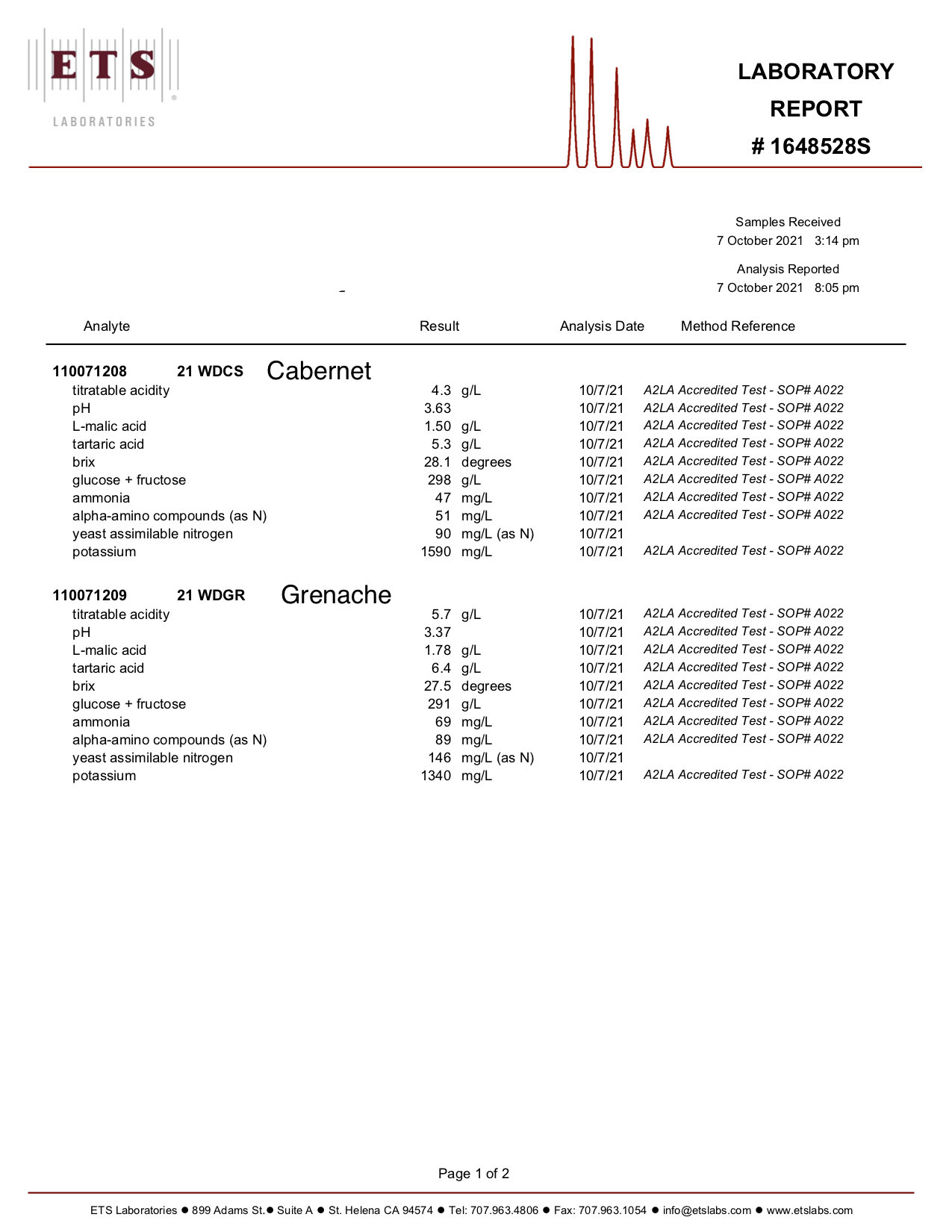
Brix: 27.5 · pH: 3.37 · TA: 5.7 g/L
Walla Walla Valley
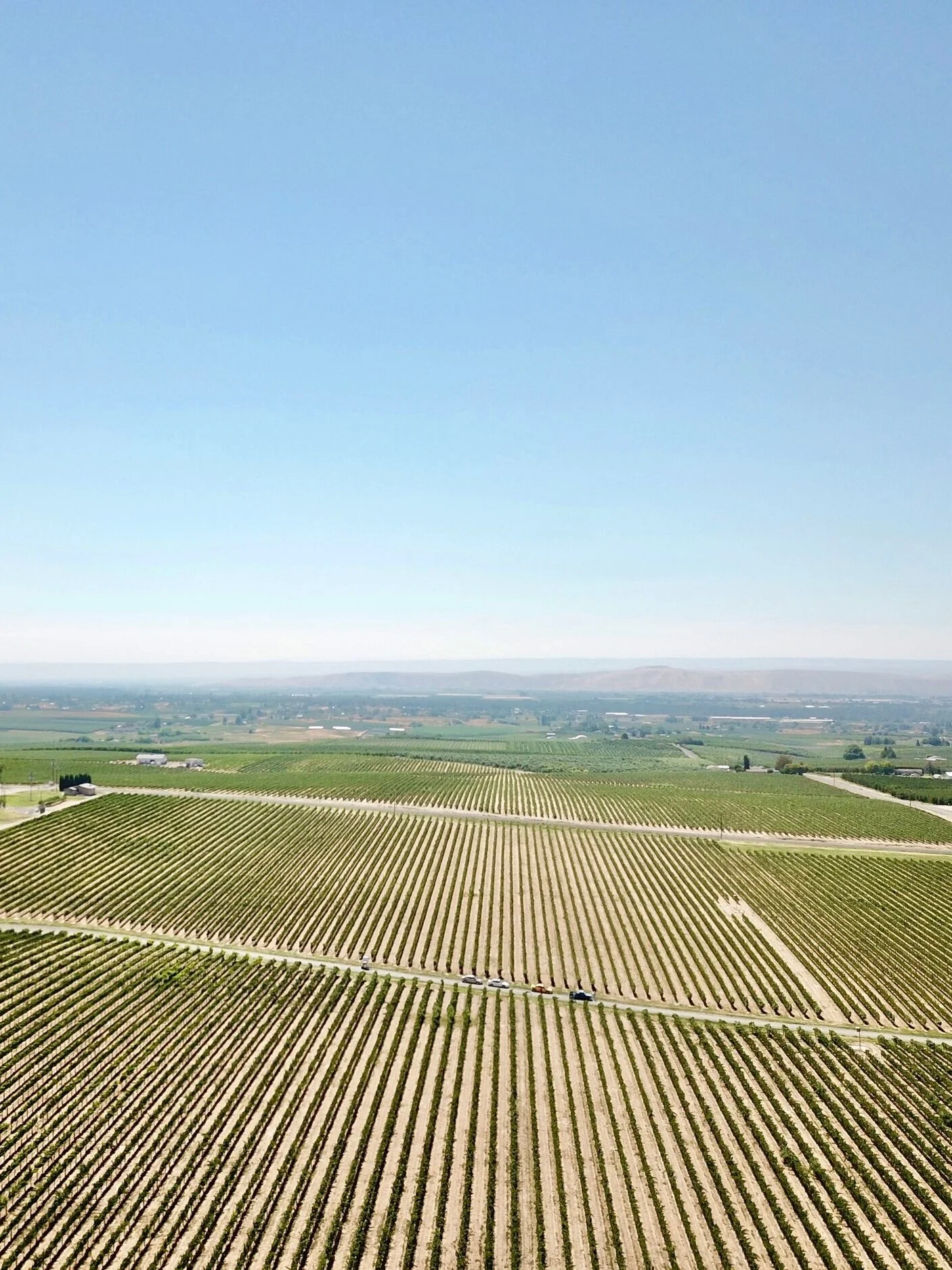
The Walla Walla Valley straddles southeastern Washington and northeastern Oregon. Walla Walla translates to “many waters” in reference to the land’s proximity to the Columbia, Snake, and Walla Walla Rivers. Rain is a seldom occurrence here and the area only receives about 15 inches of annual rainfall. Like the rest of the Columbia Valley, the landscapes and soils of Walla Walla were largely shaped by the cataclysmic Missoula Floods which swept through at the end of the last Ice Age. The Walla Walla Silt Soil left behind is a well-drained, sandy loess over Missoula Flood slackwater deposits and fractured basalt.
At the foot of the Blue Mountains
Our grapes come from a vineyard on the foot of the Blue Mountains grown at 1300 feet elevation. The vines are clone 01A, planted to 8×4 spacing in 100% Walla Walla Silt Loam. Clone 01A produces smaller berries that are ideal for a wine with darker color and concentrated flavor.
Shipping and yield
Your pail ships frozen and may arrive partially thawed. Shipping and delivery details · Estimate your finished yield
Each pail includes 5 gallons or 4.25 gallons of grape must (selection further below).
Notice: For the lowest shipping rates available, we recommend purchasing 4.25 gallon pails separately from 5 gallon pails.
Product will arrive partially frozen.
Walla Walla Valley, Washington
Old Vine Block BT4
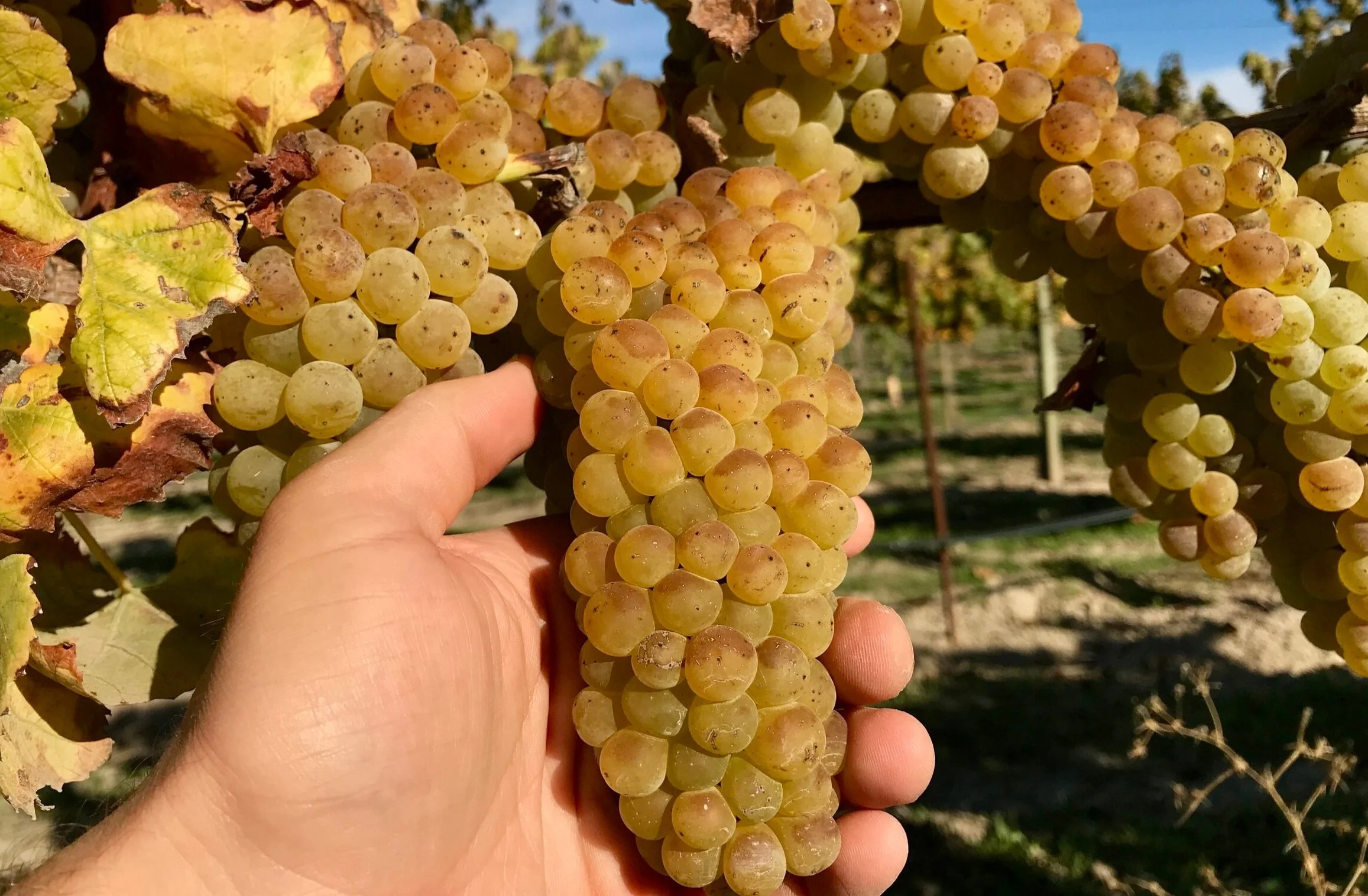
Brix: 28.1 , pH: 3.63 , TA: 4.3 g/L (full lab analysis below)
Harvested October 6th , 2021
The Walla Walla Valley straddles southeastern Washington and northeastern Oregon. Walla Walla translates to “many waters” in reference to the land’s proximity to the Columbia, Snake, and Walla Walla Rivers. Rain is a seldom occurrence here and the area only receives about 15 inches of annual rainfall. Like the rest of the Columbia Valley, the landscapes and soils of Walla Walla were largely shaped by the cataclysmic Missoula Floods which swept through at the end of the last Ice Age. The Walla Walla Silt Soil left behind is a well-drained, sandy loess over Missoula Flood slackwater deposits and fractured basalt.
Our grapes come from a vineyard on the foot of the Blue Mountains grown at 1300 feet elevation. The vines are 40 years old, and consist of clones 2, 4, 6, 8, 21, & 24 planted to 8×4 spacing in 100% Walla Walla Silt Loam.
Each pail includes five gallons of grape must. Product will arrive partially frozen.
*Grapes had exposure to smoke. Hundreds of pails sold and no one has reported any smoke flavor. No refunds issued for any smoke issues.
Chehalem Mountains, Oregon
Brix: 23.5, pH:3.40, TA: 6.9 g/L,
Malic Acid: 2.77 g/L, Tartaric Acid: 6.6 g/L,
Glucose + Fructose: 244 g/L, Ammonia: 62 mg/L,
Alpha-Amino Compounds (as N): 132 mg/L
YAN: 183 mg/L (as N), Potassium: 1830 mg/L
Harvested October 2nd, 2020
Farmed Organically but not certified. The vineyard uses “Biodynamic” agriculture but these are not “Biodynamic” grapes. See the reason why in our blog post below:
“Oregon’s specialty is Pinot Noir, a delicate and temperamental grape considered by many to make the most sensual red wine in the world”. – Karen MacNeil, The Wine Bible
Like Burgundy in France, the Willlamette Valley in Oregon is located on the 45th parallel. Both areas experience approximately the same number of degree days and an average rainfall of around 40 inches a year. Unlike Burgundy, however, Oregon receives almost all of its precipitation during the winter. This reduces the disease pressure Oregon growers face and also extends the growing season.
“From Parrett Mountain to the south, and running northwest across Bald Peak and Ribbon Ridge, the Chehalem Mountains were formed by uplifted sedimentary seabeds, lava flows, and wind-blown silt to create the highest elevations and most diverse soils in wine country. These distinctions make our winegrowing region famous for rich, elegant and complex wines including benchmark pinot noir.”
Each pail includes five and quarter gallons of grape juice. Product will arrive partially frozen.
Columbia Valley, Washington
Brix: 21.6, pH: 3.16, TA: .41
Harvested September 14th, 2018
We’re proud to offer our first Vin Gris this harvest. The Grenache Noir grapes (Tablas Creek Clone) were picked early to preserve freshness and acidity and then put immediately in the press to produce a delicate, lightly-colored juice. What separates the vin gris method from the traditional rosé method? There is practically zero maceration time. In France, “gris de gris” has to be made from lighter-tinted grapes like Gamay, Grenache, and Cinsault. Stainless steel/glass are preferable for fermentation and bulk aging, since Vin Gris has hyper-delicate qualities that could easily be overwhelmed by contact with oak.
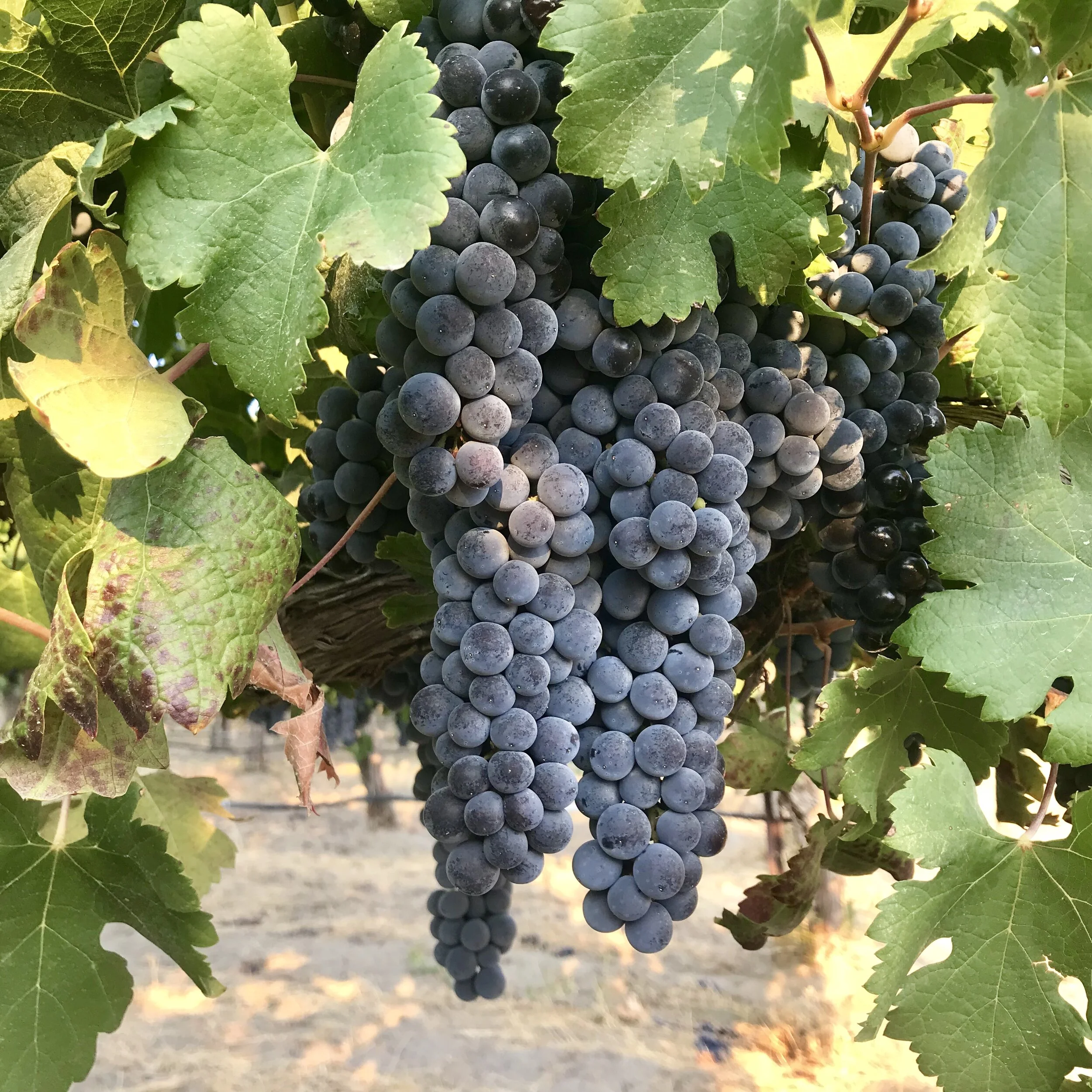
You may wish to blend in another wine to add a rosé color. Scroll down a bit to our Instagram post showing the 2018 Grenache Vin Gris on the left, and the same wine with a small addition of Syrah for color on the right.
Why wouldn’t you make your own Vin Gris of Grenache Noir?
Each pail includes five and quarter gallons of grape juice. Product will arrive partially frozen.
Willamette Valley, Oregon
Brix: 20, pH: 2.95, TA: n/a
Harvested October 13th, 2018
LIVE certified sustainable and Salmon Safe
When this vineyard was planted in 1978, there were less than 10 other vineyards in Oregon (and not a single craft brewery). Almost 40 years later these dry-farmed vines are still producing small amounts of the most aromatic and concentrated Riesling grown in the new world. The entire vineyard is certified Salmon Safe and LIVE sustainable (less than 1% of Oregon vineyards hold both certifications). First planted by post-WWII European immigrants from Hungary and East Germany, the property is now managed by the 3rd generation of family vintners.
The vines are planted in a mixture of Woodburn and Jory soils and typically yield less than 2 tons per acre. The Riesling from this site offers a combination of both strength and finesse. The aromas are delicate lemon zest, bees-wax, and petrol. The mouthfeel is powerful without being weighty.
Each pail includes five and quarter gallons of grape juice. Product will arrive partially frozen.
Columbia Valley, Washington
Brix: 24.6, pH: 3.22, TA: .52
Harvested November 6th, 2018
Surely that grape’s time will come…
It has the body of Chardonnay and the aroma of Sauvignon Blanc
– surely a recipe for success?”
–Jancis Robinson, author of The Oxford Companion to Wine
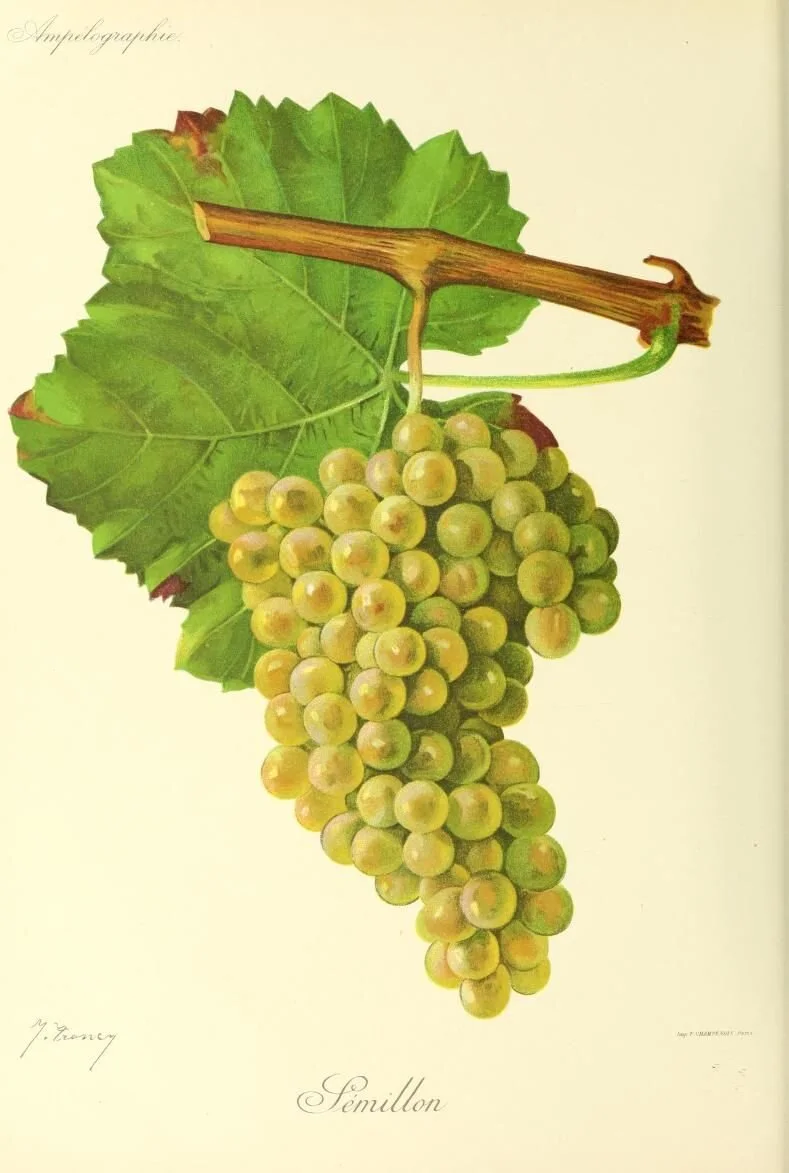
We finally found a source for excellent Sémillon!
This versatile varietal is widely planted in the Bordeaux region of France and is a key component of the dry Bordeaux blanc blend along with Sauvignon Blanc and Muscadelle. Sémillon is at the heart of Bordeaux sweet wines such as Sauternes, Barsac, and Cérons.
At 24.6 brix, you could make a dry or a sweet Bordeaux style wine! Either way, this juice’s citrus blossom and honeysuckle flavors will be a delight to work with.
We had a camera issue and regret that no pictures are available.
Each pail includes five and quarter gallons of grape juice. Product will arrive partially frozen.
** It is expressly prohibited to use the “Olivet Lane Vineyard” name for commercial purposes without permission from the Pelligrini Family.
Russian River Valley, California
Brix: 22.1, pH: 3.45, TA: .65
Harvested October 31st, 2018
The historic Olivet Lane Vineyard was planted by the Pelligrini family (3rd generation Sonoma grape growers) in 1975 and is one of the oldest existing plantings of Chardonnay and Pinot Noir in the Russian River Valley. Wines from this vineyard produce some of the highest rated and most sought after vineyard designate Chardonnays in the country. The vineyard is situated north of the Petaluma gap, which allows cooling fog to settle in almost daily during the growing season. This fog coupled with the chilly Russian River Valley nights creates a truly cool climate and lengthy growing season.
Merry Edwards – Olivet Lane Chardonnay
Williams Selyem – Olivet Lane Chardonnay
Gary Farrell – Olivet Lane Chardonnay
Acreage: 60 total acres of Pinot Noir & Chardonnay
Exposure: Various undulating plain
Soil type: Gravelly, clay loam
Positioning: North to South
Topopgraphy: Rolling Benchland
Elevation: 150 feet
Year planted: 1975Rootstock: AxR1
Scion wood clone: Martini / Wente
Vine spacing: 8 x 12 feet; vertical trellis
Trellising: Cane pruned VSP (vertical shoot positioning)
Appellation: Russian River Valley
Irrigated: Yes
Cover crop: Rotating
Each pail includes five and quarter gallons of grape juice. Product will arrive partially frozen.
Columbia Valley, Washington
Brix: 25.5, pH: 3.63, TA: .60
Harvested September 10th, 2018
Organic
We jumped at the opportunity to source this certified organic Chardonnay. The climate and soils of the Columbia Valley produce Chardonnay with intense fruit flavors. This fruit from this vineyard benefited from the well-drained soils and long hours of sunshine; developing vibrant, tropical fruit flavors.
We recommend skipping malolactic fermentation to preserve the nice round fruit flavors and mouthfeel this Chardonnay can offer to produce an early drinking and approachable wine.
We had a camera issue and regret that no pictures are available.
Each pail includes 5 gallons of grape must.
Red Mountain, Washington
Harvested October 22nd, 2022
Harvest chemistry
Brix: 24.3 · pH: 3.72 · TA: 3.8 g/L
View the harvest lab report →
Red Mountain
“The Red Mountain AVA is located on a southwest-facing slope in south central Washington, a three and one-half hour drive from Seattle or Portland. At 4040 acres (1,635 hectares), this is the smallest, warmest wine-grape growing region in Washington. It has a unique combination of diverse geology, gentle south slope, consistent winds and notable heat profile. A complex mixture of the most rare and highly valued soil types in Washington was created by wind-blown silt and sand over glacial outflow. ” – Red Mountain Alliance
Structure and flavor
Red Mountain is famed for its powerful, tannic red wines of immense concentration. The grapes are the most sought after (expensive) fruit in the entire state and have produced three of the only wines to ever receive a perfect 100–point score from Robert Parker’s Wine advocate.
Shipping and yield
Your pail ships frozen and may arrive partially thawed. Shipping and delivery details · Estimate your finished yield