2026 Napa Tannat: Big flavor. A little extra planning. Lots of possibilities.
Big Flavor.
A Little Extra Planning.
Lots of Possibilities.
We were surprised by just how juicy this year's Rutherford Tannat was. Deep, ripe blackberry character, striking color and a firm phenolic backbone were already apparent in the must. At 33.6° Brix, it also gives us some very interesting decisions to make.
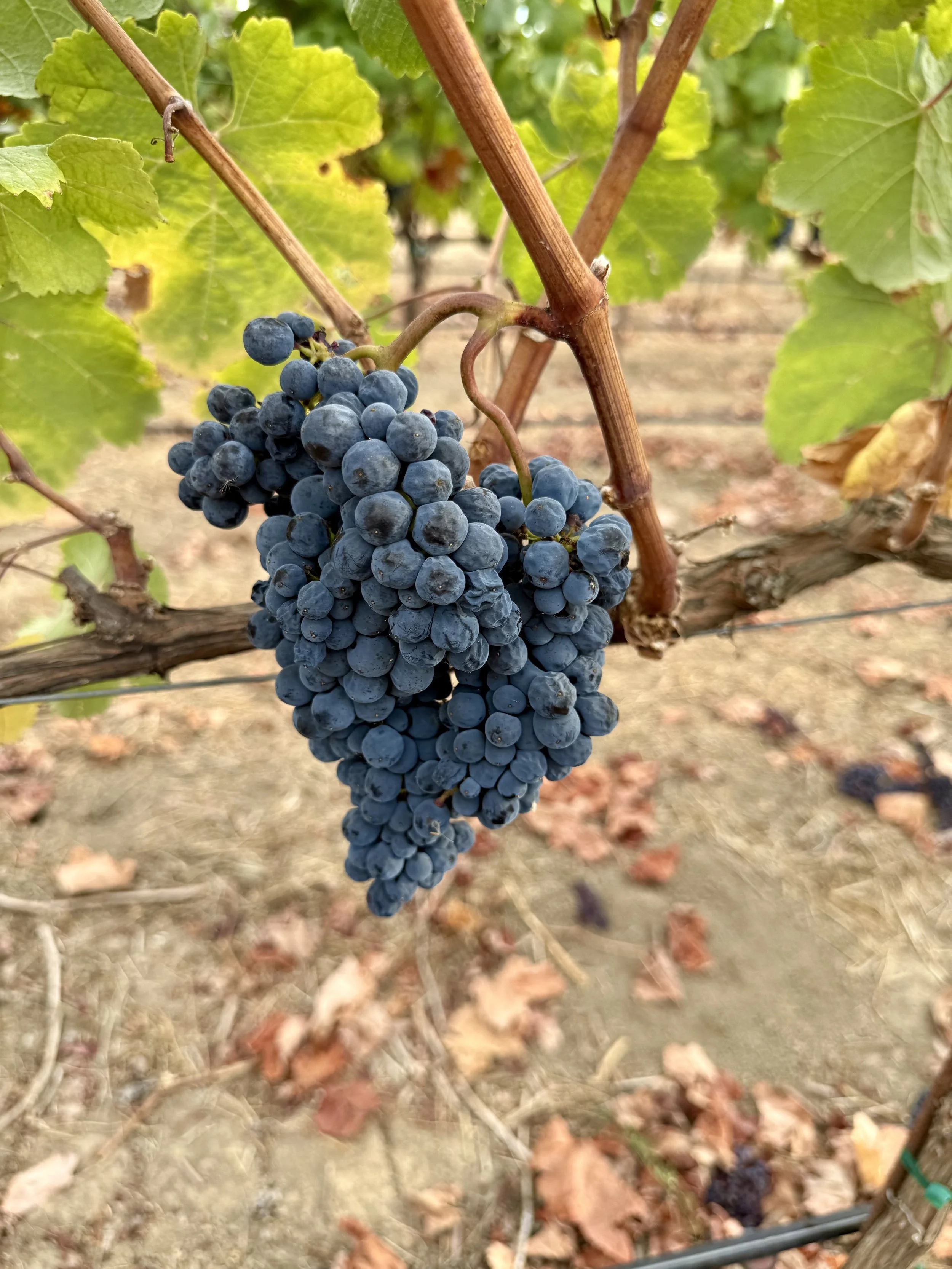
Exceptionally juicy fruit. Huge character. More than one direction.
We had a great time working with this Tannat. The berries were exceptionally juicy, and the juice had the kind of deep, ripe blackberry flavor that reminded us of blackberry preserves. There was a lot of color right away, along with impressive phenolics and structure before fermentation even began.
We knew it was concentrated, but seeing 33.6° Brix on the ETS report really got us thinking about what to do with it. You can water it back for a powerful dry red, lean into a naturally sweet style, try a fortified wine, or save some for blending. All of those are interesting, and we are excited to see what people make.
We're going to talk through the chemistry in detail, but we don't want the lab numbers to get in the way of the larger point: this fruit tastes good, and there are a lot of ways to bring that out.
From Rutherford's Heritage Vineyard
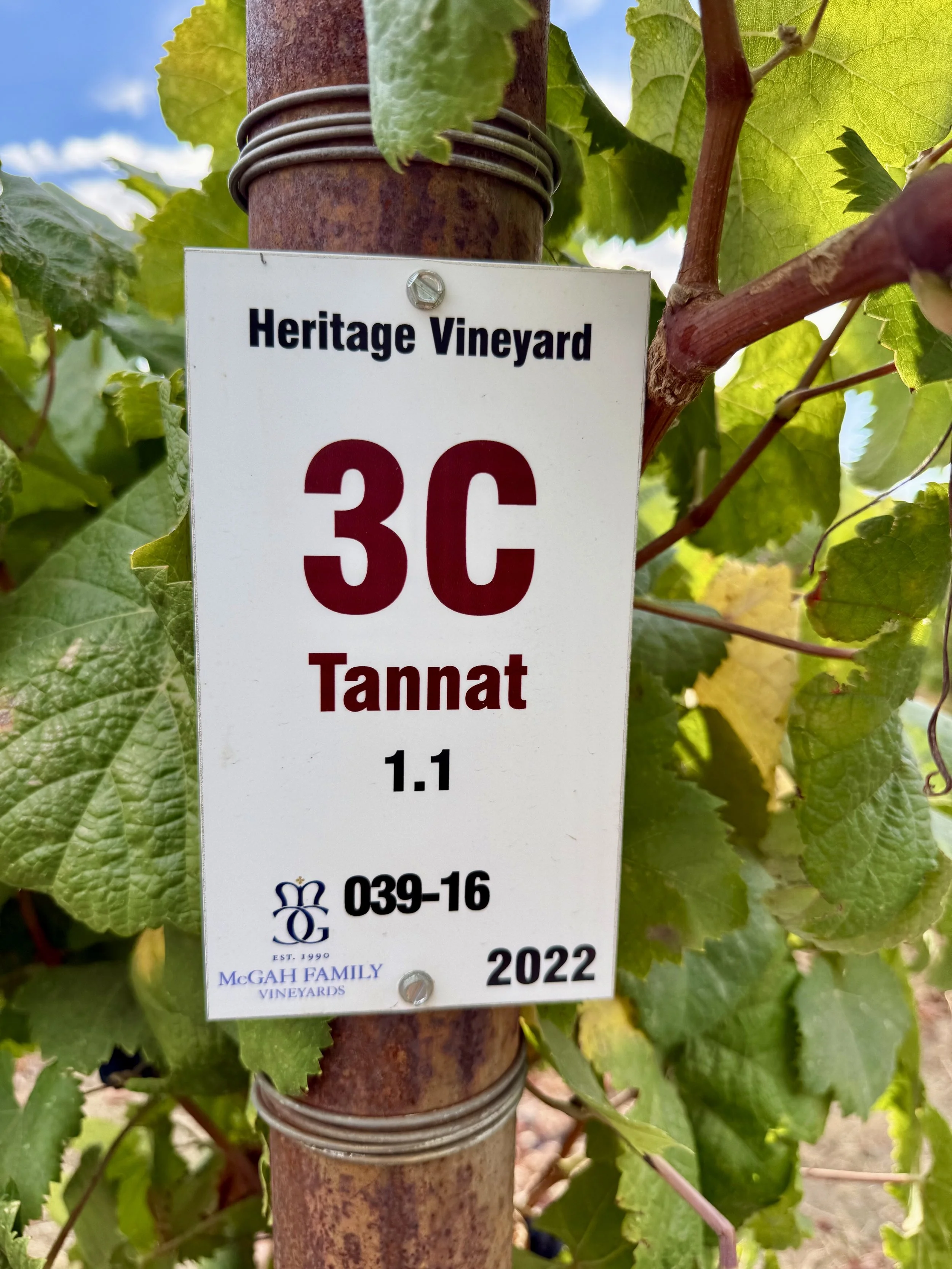
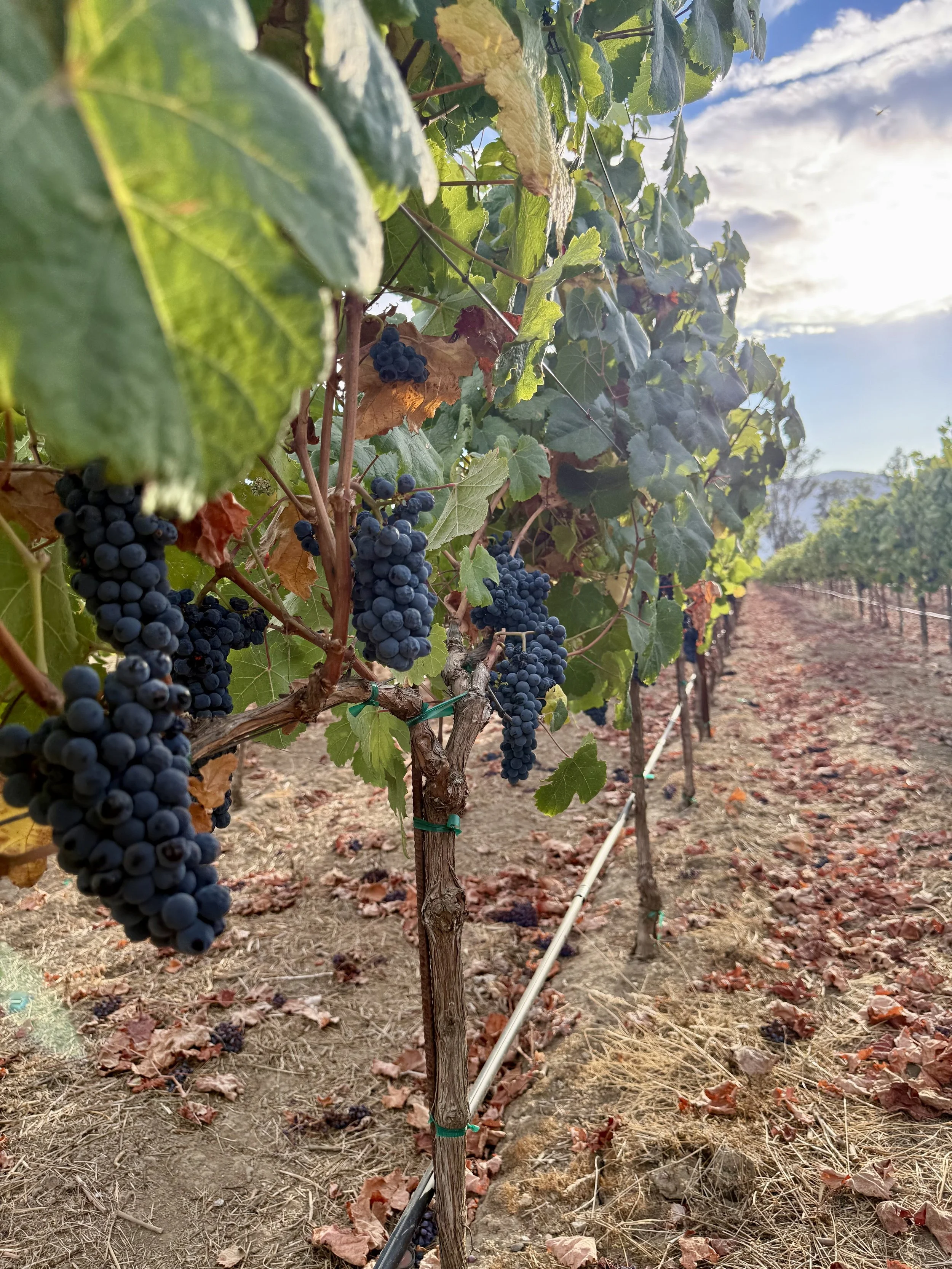
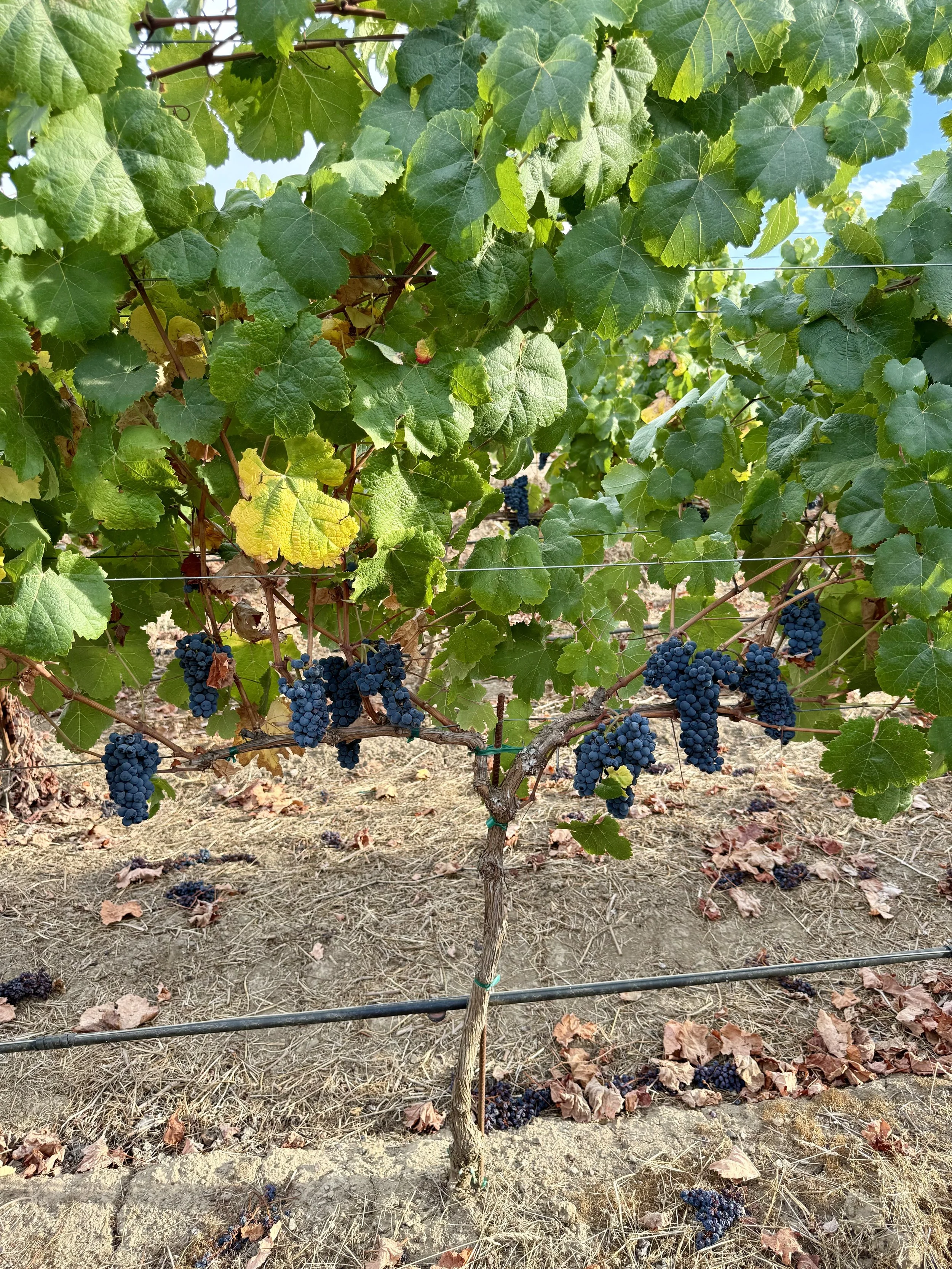
Our 2026 Tannat comes from McGah Family Heritage Vineyard in Napa Valley's Rutherford AVA. It's from Block 3C, selection 1.1, planted in 2022 on 039-16 rootstock. Tannat is an unusual grape to find in Rutherford, and we were excited to have access to it this year.
The fruit was super juicy when we processed it. The ripe blackberry character was impossible to miss, and the juice already had really attractive color, phenolics and structure. This is the sort of raw material that makes you start imagining several different wines before you've even decided on a yeast.
That structure gives us plenty to work with, whether we're making Tannat on its own, using a portion in a Cabernet blend, or doing something less expected. We've also been thinking about a blend with our 2026 Oregon Gamay; there's a lot of potential in that contrast.
Juiciness, rich blackberry flavor and a strong backbone—not just the high sugar number. Getting the balance right will matter, but the fruit has real personality worth preserving.
Why this Tannat got us thinking about Amarone and Recioto
When we saw the Brix on this year's Tannat, our minds went straight to the richly concentrated reds of northern Italy. Amarone, Recioto, and Sforzato are different wines with their own traditions, but their depth and concentration are useful inspiration for thinking about this fruit.
The important distinction is how those wines get there. In the traditional Italian appassimento process, harvested grapes are partially dried before fermentation. That concentrates sugar and other components and can change the grapes' flavor and texture. Our Tannat was not dried. It developed its unusually high sugar concentration on the vine and arrived exceptionally juicy.
We're not saying this will taste like an Amarone or that Tannat made in Napa becomes an Italian wine. What excites us is the chance to borrow some stylistic ideas: intense fruit, deep structure, considerable richness—and the freedom to choose whether the finish is dry or sweet.
Concentration that developed on the vine—not by drying harvested grapes.
That means appassimento is a reference point, not a description of our processing method.
Amarone della Valpolicella
Amarone's powerful, dry expression offers a useful inspiration for handling ripe, concentrated fruit without leaving a sweet finish. The grapes and production methods are different, but we like the idea of a serious Tannat with that kind of depth.
Recioto della Valpolicella
Recioto is the obvious comparison when we think about the possibility of leaving some of this Tannat's natural sweetness. That's a winemaking decision that needs a proper fermentation-control and stability plan—not a hoped-for stuck fermentation.
Sforzato di Valtellina
Another dry, appassimento-based wine—made from Nebbiolo in Lombardy—that shows how concentration and structure can become an age-worthy style. It gives us another point of inspiration for tannin management and aging.
Valpolicella Ripasso
Ripasso involves passing a Valpolicella wine over the pomace from Amarone or Recioto production. It's not simply another dried-grape wine, but its blending and extraction logic is an interesting reminder of how skins and secondary contact can reshape a red.
Not the label, not the grapes, and not a claim of traditional appassimento. The inspiration is having the confidence to work with a very concentrated harvest in different ways instead of treating its high Brix as a problem with only one solution.
Complete ETS Analysis: what each result means
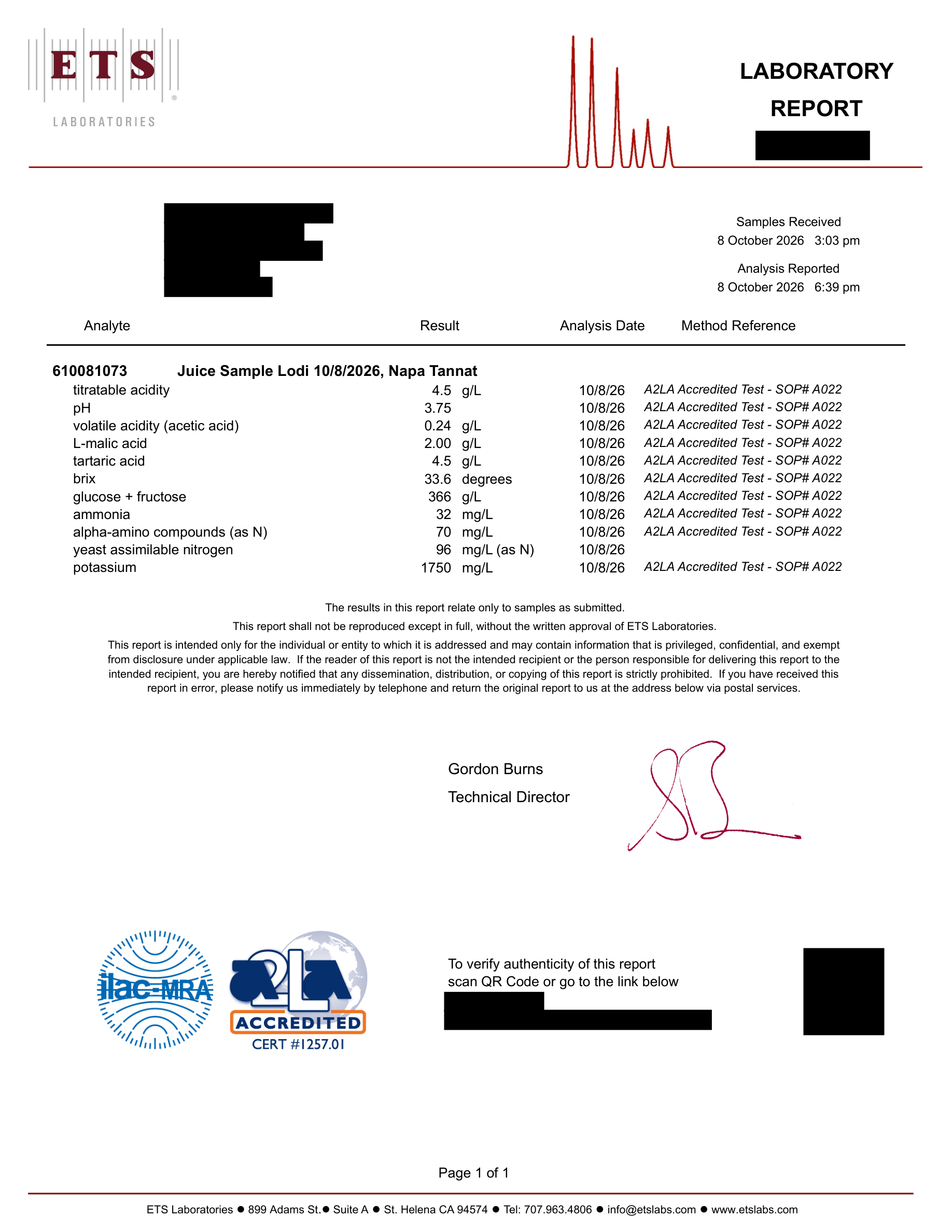
These are the actual pre-adjustment results reported for the Napa Tannat juice sample analyzed October 8, 2026. They are a starting snapshot, not a prediction of what the wine will measure after dilution, acid addition, fermentation, or malolactic fermentation.
| Analyte | Measured value |
|---|---|
| Brix | 33.6° |
| Glucose + fructose | 366 g/L |
| pH | 3.75 |
| Titratable acidity (TA) | 4.5 g/L |
| Potassium | 1,750 mg/L |
| Yeast-assimilable nitrogen (YAN) | 96 mg N/L |
| L-malic acid | 2.00 g/L |
| Tartaric acid | 4.5 g/L |
| Volatile acidity (acetic acid) | 0.24 g/L |
| Ammonia | 32 mg/L |
| Alpha-amino compounds (as N) | 70 mg/L |
Brix & sugar: big potential, big decisions
33.6° Brix and 366 g/L glucose + fructose indicate unusually high sugar. Fermenting that concentration fully dry would demand far more alcohol tolerance than most yeast strains can practically deliver. Water-back is one route to a manageable dry red; retaining sugar is another stylistic choice.
pH & TA: measure both
pH 3.75 and TA 4.5 g/L indicate the need to consider freshness, microbial control, SO₂ effectiveness, and balance. pH is not interchangeable with TA. Acid adjustments should be made in stages and followed by new measurements and tasting.
Potassium: the buffering story
At 1,750 mg/L, potassium deserves attention. It participates in tartaric-acid buffering and potassium-bitartrate precipitation, which means a calculated acid addition may not produce the predicted pH movement. Dilution lowers potassium concentration, but a successful pH adjustment still requires bench trials.
YAN: plan nutrition early
96 mg N/L YAN is low for a demanding, high-sugar fermentation. Choose an appropriate yeast, consider a balanced nutrient program, and make additions on the yeast's schedule rather than adding a large late dose. Dilution without nutrient additions lowers YAN concentration further.
Malic & tartaric acids
The 2.00 g/L malic acid result is relevant to any malolactic fermentation (MLF) plan. The 4.5 g/L tartaric acid measurement helps contextualize the starting acid system, but neither value alone tells you how many grams of tartaric acid to add.
VA, ammonia & amino compounds
0.24 g/L volatile acidity is a baseline acetic-acid measurement, not proof that the finished wine will be stable. 32 mg/L ammonia and 70 mg/L alpha-amino N help characterize the nitrogen pool; the separate YAN result should guide fermentation-nutrition planning.
Everything in the ETS table is a laboratory result. Alcohol potential, water-back volume, projected pH changes, residual sugar and bottled yield elsewhere in this guide are estimates based on explicit assumptions. Always remeasure your own batch.
Three wines. One remarkable Tannat.
This harvest isn't locked into one outcome. You could make a powerful, structured dry red; preserve an intentionally sweet finish; or use grape spirit to make a Port-style wine. Each route changes your sugar strategy and stability requirements.
Big, Dry Red
Aim for roughly 25° Brix, preserve tannin structure, and ferment under a planned nutrient program.
Explore dry red →Naturally Sweet
Work with the original concentrated must and plan for sweetness, alcohol, and microbial stability.
Explore sweet wine →Port-Style
Use a carefully calculated spirit addition to reach a fortified finish with retained fruit sweetness.
Explore Port-style →Make a Serious, Dry Rutherford Tannat
For a conventional dry red, water-back can reduce the sugar burden while preserving much of Tannat's color and structure. A target around 25° Brix is a reasonable working example—not a guarantee of alcohol, mouthfeel, or final pH. Check the revised must chemistry before yeast inoculation.
For perspective, a simple volume-ratio estimate gives roughly 1.20 US gallons of water per 5-gallon pail when assuming 3.5 gallons of juice. A density-aware sugar-mass calculation puts the estimate closer to 1.38 gallons to move from 33.6° to 25° Brix. Neither is a fixed recipe: start conservatively, mix well, remeasure, and refine the addition to the must in front of you. Acid additions also need their own bench trials; don't follow a fixed tartaric number without checking pH and TA.
Don't chase 33.6° all the way to dry.
Around 25–26° Brix is a practical target to explore for a conventional dry red. This isn't an automatic recipe: estimate actual recoverable juice, adjust water in stages, recheck Brix, pH and TA, then build your yeast and nutrient plan.
Using 3.5 gallons of recoverable juice, the density-aware estimate is about 1.38 gallons of water to reach 25° Brix. Your actual addition depends on how much liquid the skins are carrying and your measured starting Brix.
Practical order of operations
- Thaw and mix the must thoroughly. Check the actual Brix and temperature.
- Choose your target Brix and estimate the recoverable liquid volume, not the volume occupied by skins.
- Use potable low-mineral, chlorine/chloramine-free water; acidulate only with a calculated, tested plan.
- Add water in stages. Mix, wait for equilibration and remeasure Brix, pH and TA.
- Use bench trials to determine tartaric additions; do not apply a fixed grams-per-pail number without retesting.
- Build a yeast/nutrient program using the now-diluted YAN and the expected alcohol.
Make a Naturally Sweet Red
Instead of lowering the Brix all the way to a typical dry-red starting point, we could lean into the fruit's natural concentration and make something lush, rich, and deliberately sweet. The Recioto comparison is useful here as a stylistic idea, even though our Tannat was never dried. It's an exciting possibility, provided fermentation and microbial stability are planned from the start.
Using the measured 366 g/L glucose + fructose and an illustrative conversion of 16.83 g/L sugar consumed per 1% alcohol, a hypothetical fermentation at 16% alcohol could leave around 97 g/L sugar. In reality, yeast metabolism, volume changes and analytical variation alter the final value. This is a scenario, not a method for reliably stopping fermentation at 16%.
How much sugar could remain?
| Hypothetical ABV | Estimated residual sugar |
|---|---|
| 14% | ~130 g/L |
| 15% | ~114 g/L |
| 16% | ~97 g/L |
| 18% | ~63 g/L |
Illustrative sugar use based on 366 g/L measured glucose + fructose and approximately 16.83 g/L consumed per 1% alcohol; NOT predictions of fermentation stopping points. Confirm sugar analytically.
Perceived sweetness is about balance
| Broad style | Typical residual sugar |
|---|---|
| Dry | 0–4 g/L |
| Off-dry | 4–12 g/L |
| Medium-sweet | 12–45 g/L |
| Sweet | 45+ g/L |
Informal descriptive ranges, not a labeling standard. Alcohol, acidity and tannin change how sweet a wine tastes.
Do not count on a fermentation simply stopping at your desired residual sugar. Sweet wine can restart fermentation in the bottle. Confirm actual alcohol, glucose/fructose and stability, and use a validated stabilization approach appropriate for your equipment, wine chemistry and intended storage.
Make a Port-Style Tannat
Tannat's color, tannin and dense fruit can make it an appealing candidate for a Port-style fortified wine. Here the spirit addition is deliberate: the goal is to raise alcohol while retaining sugar and maintaining an attractive balance.
As a worked example—not a blending instruction, suppose you have 1 US gallon at 15% ABV, approximately 114 g/L residual sugar, and a 77% ABV grape spirit. Adding about 332 mL of that spirit theoretically raises the mixture to 20% ABV, with sugar diluted to about 105 g/L. Real wines require verified alcohol, volume and appropriate spirit selection before fortification.
A Port-style example
Simplified additive-volume example. Actual blending, volume contraction, residual sugar, legal definitions and stability require measurement and confirmation.
What to evaluate before fortifying
The wine's real ABV and sugar, your spirit strength, final volume and desired balance all matter. Too little fortification may not provide the expected stability; too much can overpower the fruit.
For a small batch, calculate the blend, confirm your numbers, then run a measured bench trial to see how fruit, sweetness, tannin and spirit integrate. Any wine offered for sale must also comply with applicable laws.
Higher alcohol can improve microbial resistance, but it does not replace sound sanitation, testing and an appropriate finishing protocol.
What if we put this Tannat together with our 2026 Oregon Gamay?
We're particularly curious about blending a little of this Rutherford Tannat with our 2026 certified organic Gamay from Croft Vineyard in Oregon's Mount Pisgah AVA. They're quite different grapes, and that's exactly why the idea is fun.
The Tannat has deep blackberry character, big color and firm structure. The Gamay we tasted at crush was bright, fresh and wonderfully aromatic, with that almost grape-jam fruit character. Could the Gamay bring some lift and freshness while the Tannat gives the blend more backbone? We'd like to find out.
We'd ferment the varieties separately, taste them on their own, and start with small blending trials. No one can know the best ratio from the harvest numbers alone.
Explore our 2026 Oregon Gamay ↗Start small. Taste blind.
| Trial | Gamay | Tannat |
|---|---|---|
| 1 · A hint of structure | 90% | 10% |
| 2 · A bigger contribution | 75% | 25% |
| 3 · A true partnership | 50% | 50% |
Exploratory blend ratios, not recommended formulas. Evaluate acidity, tannin, flavor, microbial stability and finishing chemistry on the real wines. Blending non-organic Tannat into certified organic Gamay also changes what organic claims may be made about the finished wine.
And of course, the more traditional Bordeaux-style options are still there. This Tannat could be fascinating with Cabernet Sauvignon, Merlot, Cabernet Franc, or Malbec. The fun part is deciding what the finished wine needs instead of assuming the answer in advance.
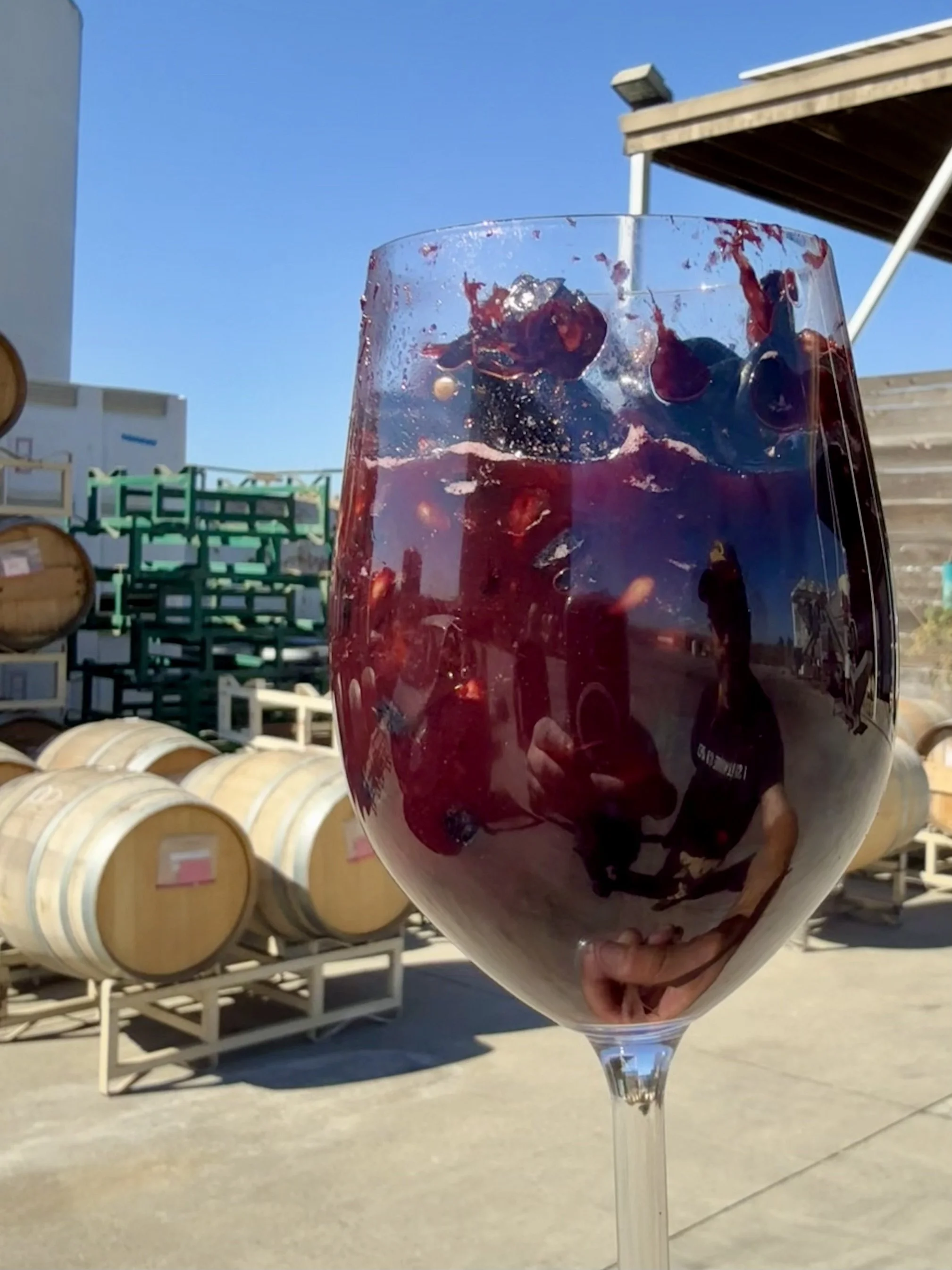
This is why we're excited about this year's fruit.
We sampled the must right there on the crush pad. It was extraordinarily juicy, with a rich blackberry flavor—almost like a preserve—and a color that was already remarkably deep before fermentation.
The phenolics and structure were evident too. That gives us plenty of options, but it doesn't mean we want to extract as much as possible just because we can. The trick will be keeping that fruit character alive while making the wine balanced.
We can't wait to see what everyone does with it, from a dry Rutherford Tannat to a sweet, Italian-inspired interpretation or an unexpected Gamay blend.
How many extra bottles could water-back yield?
Change the Brix target, number of pails and expected recovery assumptions. The tool estimates added water using a sugar-mass balance and projects bottle equivalents after an editable retention assumption. It does not promise a particular finished-wine yield.
Start with a scenario
Based on 3.5 gal projected juice per pail and 75% of added water retained through bottling. Sugar-mass balance includes an estimated density correction.
The main Wine Grapes Direct calculator is linked above. Its prefilled-value URL behavior has not yet been verified. The “copy scenario” action links directly back to this embedded yield model with your settings.
What the extra volume means
On a pail that might otherwise yield about 3.5–4 finished gallons, water-back can materially increase available volume. That's why a rough 1.2-gallon water addition can suggest something like 4.7–5.2 gallons of combined liquid in an idealized volume-only example before accounting for additional losses. Your real bottled yield will depend on actual juice recovery, fermentation and cellar handling.
The trade-off
Dilution can ease a difficult Brix and lower potassium concentration, but it also changes phenolic concentration, acidity, nutrients and flavor. More bottles are a welcome outcome—not the only winemaking objective.
MLF, stabilization and finishing: choose deliberately
Decisions made after primary fermentation matter just as much as Brix at the start. Your preferred wine style should determine the malolactic fermentation and microbial stability plan.
Dry red
MLF may be appropriate to soften acidity and create a stable red-wine profile. Confirm completion analytically rather than assuming it happened. Track pH and manage sulfite, oxygen and microbial risk accordingly.
Naturally sweet red
MLF might be a deliberate choice, but residual sugar and malic acid can complicate microbial stability. Plan the sequence of fermentation, MLF (if used), stabilization, filtration, and bottling rather than trying to fix sweetness-related problems at the end.
Port-style
Fortification changes the microbial environment, but stability still depends on measured alcohol, residual sugar, pH and sound cellar practices. Avoid assuming alcohol alone makes every fortified wine shelf-stable.
Different styles, different finishing plans
Dry red: Decide whether to complete MLF; confirm it analytically, then manage sulfur dioxide, oxygen and stability.
Naturally sweet: Preserving sugar means reliable fermentation control, microbial stabilization and usually filtration decisions.
Port-style: Verify alcohol and sugar after fortification; don't assume a higher ABV eliminates all microbial risk.
Test the wine you actually made: alcohol, pH, TA, residual glucose/fructose, free/total SO₂ as appropriate, and MLF status where relevant. Sweet and fortified wines require a credible microbial stability plan before bottling.
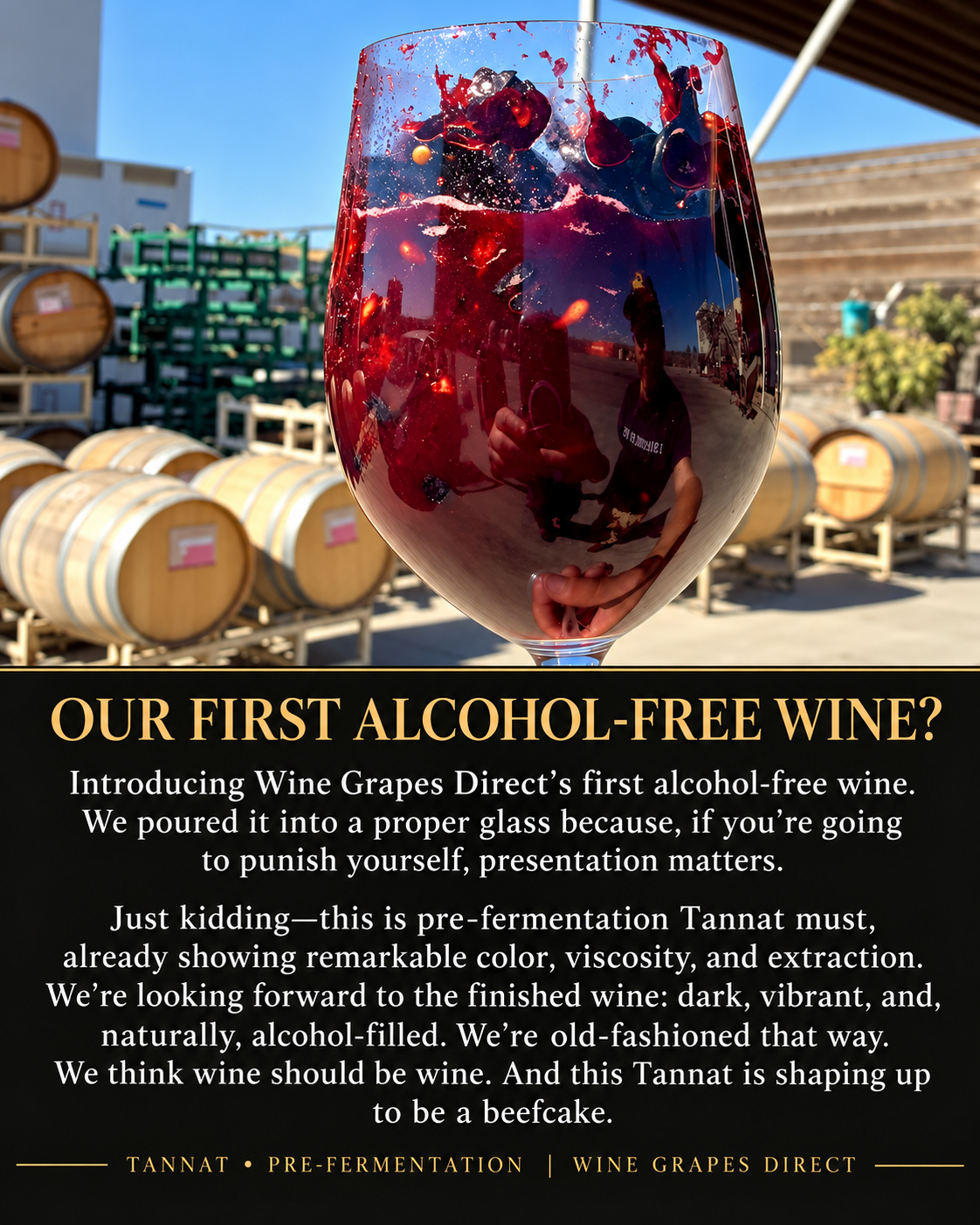
Our first alcohol-free wine? Not quite.
We poured some of the unfermented Tannat must into a wine glass, and the color was so dramatic we couldn't resist making a joke about our first alcohol-free wine.
Don't worry. We have considerably more ambitious plans for the finished product.
2026 Rutherford Tannat · Grape Must
McGah Family Heritage Vineyard · Rutherford AVA · 5-gallon must pails. See the current listing for availability, ETS report imagery and fulfillment updates.
Sources & methodology
Primary data: ETS Laboratories, sample labeled “Juice Sample Lodi 10/8/2026, Napa Tannat,” analyzed October 8, 2026. Reported measurements apply to the submitted sample. Vineyard: Heritage Vineyard, Block 3C, Tannat selection 1.1, planted 2022. Harvest impressions reflect what we tasted during processing. Independent educational reading:
- Oregon State University Extension — Grape chemistry and prefermentation adjustments
- Penn State Extension — Why, when, and how to measure YAN
- Wine Grapes Direct — How to Use the Winemaking Calculator
Educational information only. Outcomes depend on the actual must, representative measurements, yeast selection, sanitation, fermentation management and bench trials. This article is not a guarantee of wine quality, bottle yield or microbiological stability.