Great fruit.
Plenty of possibilities.
Floral whites, dark cherry, bright rosés, and red-fleshed apples. There’s a lot of flavor here to work with. Let’s put some of it into your next seltzer.
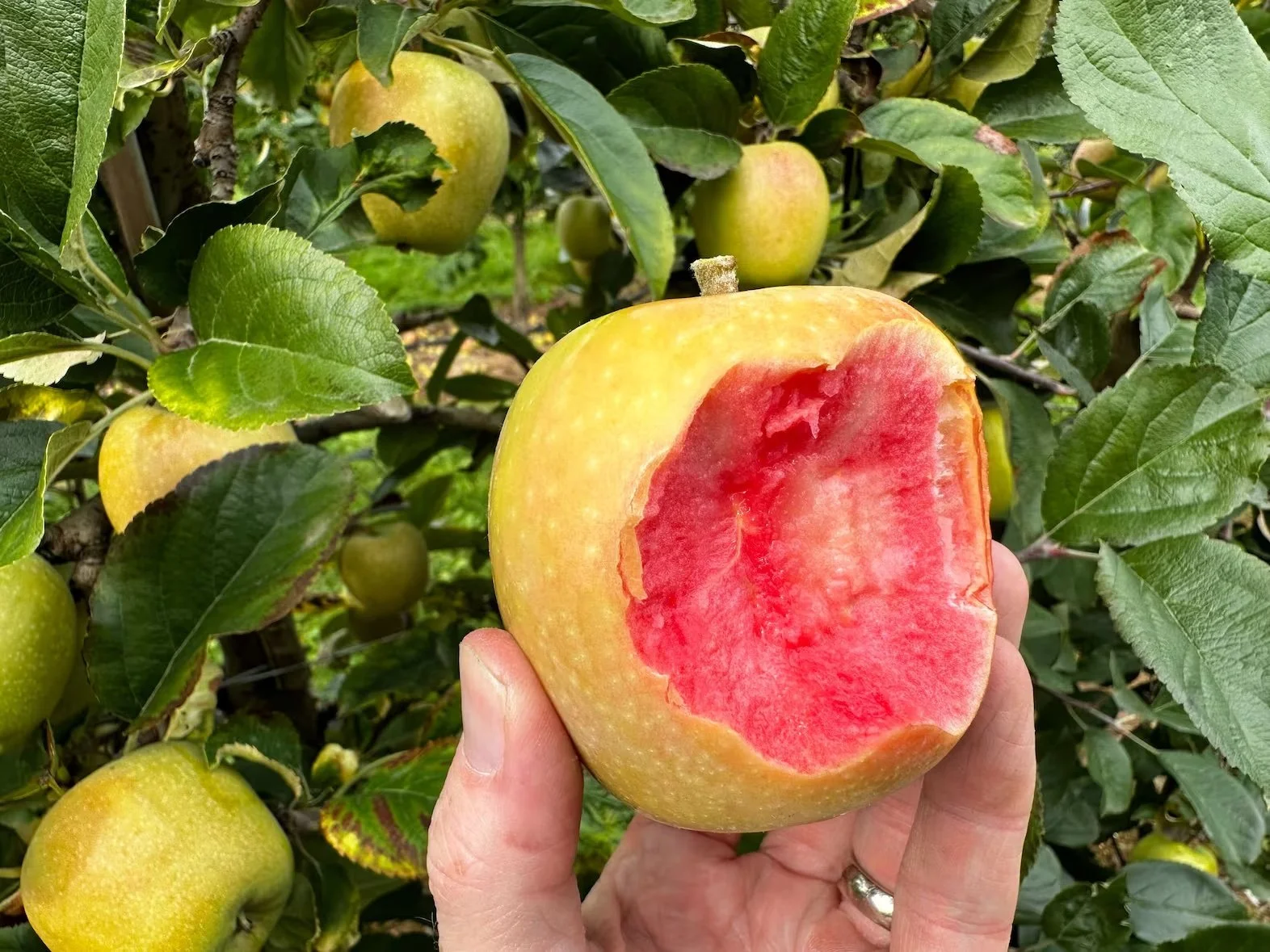
Airlie Red Flesh cider apples. A pretty good place to start!
Would our juice work for hard seltzer?
Absolutely! A brewer recently asked me this after finding that grape beers weren’t moving the way he’d hoped. Some of our most successful brewery customers have been using our juice for seltzer for years.
The interesting part is how much character the grape can bring. You’ve got aromatics, acidity, color, and flavor that carries through the finish. Choose a variety you like, keep the first batch simple, and see what it does.
Some brewers want a light, crisp drink. Others are making fuller wine/seltzer hybrids. Both can work. The fruit and the process should fit the style you want to pour.
Roussanne. Green tea character.
A place at the table.
Some ideas stick with you. This is one of them: a dry, finely sparkling Roussanne seltzer built around the Japanese-green-tea character I taste in our juice.
I keep picturing it with food. Sushi and sashimi. Ginger-steamed fish. Scallion pancakes. A plate of dumplings with a little soy and citrus. Something fresh and aromatic, with enough grape character to belong beside the meal.
I’ve been looking at restaurant drink lists and wishing for something like this—a non-beer option that says, right away, pour me with that. A Roussanne-led seltzer could give a brewer a clear story to tell a restaurant, and give the restaurant a pairing worth putting on the menu.
Let the grape lead.
Start with the Roussanne on its own. I get that green-tea impression from the juice itself, and I’d also be interested in bringing actual green tea into the blend. A little gently brewed sencha could be a lovely direction to explore. I’d try a few small additions to the finished base, tasting as I go, so the tea supports the grape without taking over or making the finish too bitter.
Build it around the dish.
We’re imagining a dry, refreshing version with fine bubbles and a restrained finish. Try it beside the food you want to serve. Sushi, ginger, soy, and fiery chili ask different things of a drink; one recipe doesn’t have to cover them all.
This is a batch I’d love to see someone make. If you brew it, please tell us what you tried—and what you poured it with.
These have already worked.
One brewery became a regular buyer of substantial quantities of our juice for its seltzers. Their drinks have explored everything from floral whites and fruit blends to herbal reds and spritz-inspired hybrids. There’s quite a range beyond the usual fruit-flavored seltzer.
Another brewer started with a peach Bellini-style batch, then came back for Malbec rosé juice to use with strawberry purée. My brother Michael tasted that rosé seltzer. The color and flavor from just a couple of pails really impressed him, and the grape still had plenty to say alongside the strawberry.
Sauvignon Blanc & peach
A Bellini-inspired combination with fresh white-grape character and peach. You could keep it crisp and dry or leave a softer fruit impression. That depends on your customers and what you like to drink.
Rosé & berries
Malbec rosé and strawberry have been a successful customer pairing. Another direction combines aromatic Muscat with raspberry, tart cherry, prickly pear, and hibiscus. Plenty going on, but the grape can still hold the blend together.
Pinot Noir, raspberry & sage
A customer’s finished hybrid brings Pinot Noir juice together with raspberry and white sage. Fruit first, with an earthy, herbal note behind it. Start lightly with the herb so you can still taste the grapes.
Floral whites & botanicals
Gewürztraminer and elderflower make a natural floral pairing. Muscat can bring intense ripe-grape aromatics to a blend, and aromatic grapes have also worked in citrus-and-botanical, spritz-inspired hybrids.
These examples include higher-alcohol hybrids as well as seltzer ideas. Decide on your intended strength early. Ask us about current fruit options; varieties and vintages change.
Choose your starting point.
Here are a few directions I’m excited about. The tasting notes come from our fruit; the new combinations are ideas to try in a small batch.
Roussanne: think Japanese green tea
A fresh, aromatic starting point for a food-focused seltzer. See the Roussanne pairing idea above →
Ribbon Ridge Pinot Noir: dark cherry
Both the 2025 and 2026 Ribbon Ridge lots have expressive dark-cherry flavor and deep color. If you want a more substantial, wine-like hybrid, these are worth a look. They’re grape must with skins, so you’ll need a plan for extraction and pressing or separating the solids.
Sauvignon Blanc: fresh & grassy
Fresh, grassy character gives you plenty to work with. Peach is already a proven direction. A little citrus or an herbal accent could be good too, but taste the grape first. You may not need much else.
Chenin Blanc: a chalky edge
That pleasant chalky, mineral impression is what I like about our Chenin. Keep the first trial clean and simple. See how that character holds up in a dry, sparkling drink before bringing in another fruit.
Riesling: lime, orchard fruit & acidity
My brother Michael’s notes on our 2022 Riesling picked out lime, honey, and a little petrol. He liked it bone dry, with plenty of acidity, and we’ve had good results making bubbles with it. For seltzer, think about the balance after dilution and fermentation. Bright fruit and a lively finish are a good place to aim.
Orange Marsanne: apricot & skins
Our orange Marsanne has an apricot-like character that could be fun in a fuller hybrid. It comes as must, with skins, so it asks a little more of your process than juice. We have only a small lot left; check with us before building a production plan around it.
And Chardonnay?
A buttery seltzer would certainly be an experiment! That butter character is largely about diacetyl and malolactic fermentation, rather than simply choosing Chardonnay juice. Lees contact and stirring affect texture and can also reduce diacetyl. If that’s the style you’re after, it needs its own fermentation plan. Scott Laboratories explains the diacetyl side here.
Good color. Real fruit character.


These are our rosés in the glasses. Malbec leans toward strawberry, with that lighter salmon color. Carignan is more raspberry-driven, with a brighter pink hue. Both are juice, so there are no grape skins to manage.
I’d taste each on its own before deciding what to blend with it. Strawberry builds naturally on the Malbec’s own fruit character; Carignan gives you a raspberry direction to explore. A simple grape-led version of either is worth trying too. Your finished seltzer’s color will depend on the proportion of juice and how you handle fermentation.
Don’t overlook the cider apples.
Take a look at that apple! Our Airlie Red Flesh cider rosé juice has me thinking about a whole other direction for seltzer.
You’ve got tart apple character and the potential for a natural pink hue. I’d start with a simple apple-led batch, then try a little berry, ginger, or aromatic grape juice alongside it. Keep enough apple in the blend that you can actually taste what makes it interesting.
Cider juice opens up another direction for brewers: crisp apple character, the potential for natural pink color, and plenty of room to develop something distinctive. A dry apple-and-grape blend, a rosé cider seltzer, or a ginger-accented seasonal pour could each bring something different to your tap list. I’m excited to see where brewers take it.
Color will change with dilution and processing, so try a small batch first. These cider lots are limited, and some are pre-orders with shipping dates still to be confirmed. Check the listings or ask us what’s available for your timing.
Taste it. Then decide what it needs.
That’s how my brother Michael and I approach our own test batches: do the basics, establish a baseline, and learn what the fruit brings before making a lot of changes. It’s much easier to decide on a blend once you’ve tasted what you’re working with.
Frozen juice lets you plan around your production schedule. Start with pails, keep them frozen until you’re ready, and talk to us about larger quantities once you have a drink you want to make again.
One practical point: our juice is raw, not aseptic. Fermenting it and blending it into a finished base require different plans. Account for the added sugar, final alcohol, and package stability. Must also means skins and solids to handle. Let us know your setup so we can point you toward a suitable starting material.
The same fruit can make still or sparkling wines too, where your production setup and licensing allow. There’s no shortage of possibilities.
Using grape and cider juice in hard seltzer
Can I make hard seltzer with wine grape juice?
Yes. Our brewery customers have used grape juice in fermented seltzers and wine/seltzer hybrids. The proportion of juice, fermentation, dilution, and finishing choices determine how light or wine-like the drink becomes. Start with the flavor and strength you want, then build the recipe around that.
Which grape juices should I try first?
For a fresh white style, consider Sauvignon Blanc or Roussanne. Malbec rosé brings strawberry character; Carignan rosé leans toward raspberry. Choose juice if you want to avoid handling grape skins. Our current listings distinguish juice from must and show availability.
Can I use cider apple juice in a seltzer?
It is a direction I’d love to see our customers explore: apple-led flavor, fine bubbles, and perhaps a little grape juice or ginger. Airlie Red Flesh juice adds the possibility of a natural pink hue. These are development ideas, so test the blend, color, and finished stability before scaling up.
Can I start with pails before ordering in bulk?
Absolutely. Start with a manageable batch and taste what the fruit brings. When you’re ready to scale, ask us about bulk juice, drums, and pallet quantities. Tell us your batch size and timing so we can match the fruit and shipment to your plans.
Have a batch in mind?
Send us your batch size, when you want to make it, and the style you’re after. Crisp and dry? More fruit? A fuller wine-like hybrid? We can help you choose the fruit and get you pricing.
And if you make something you’re excited about, keep us posted. I always want to hear how it turns out!
Planning a larger batch? See our bulk-order options.
Cheers!
Andrew
Wine Grapes Direct