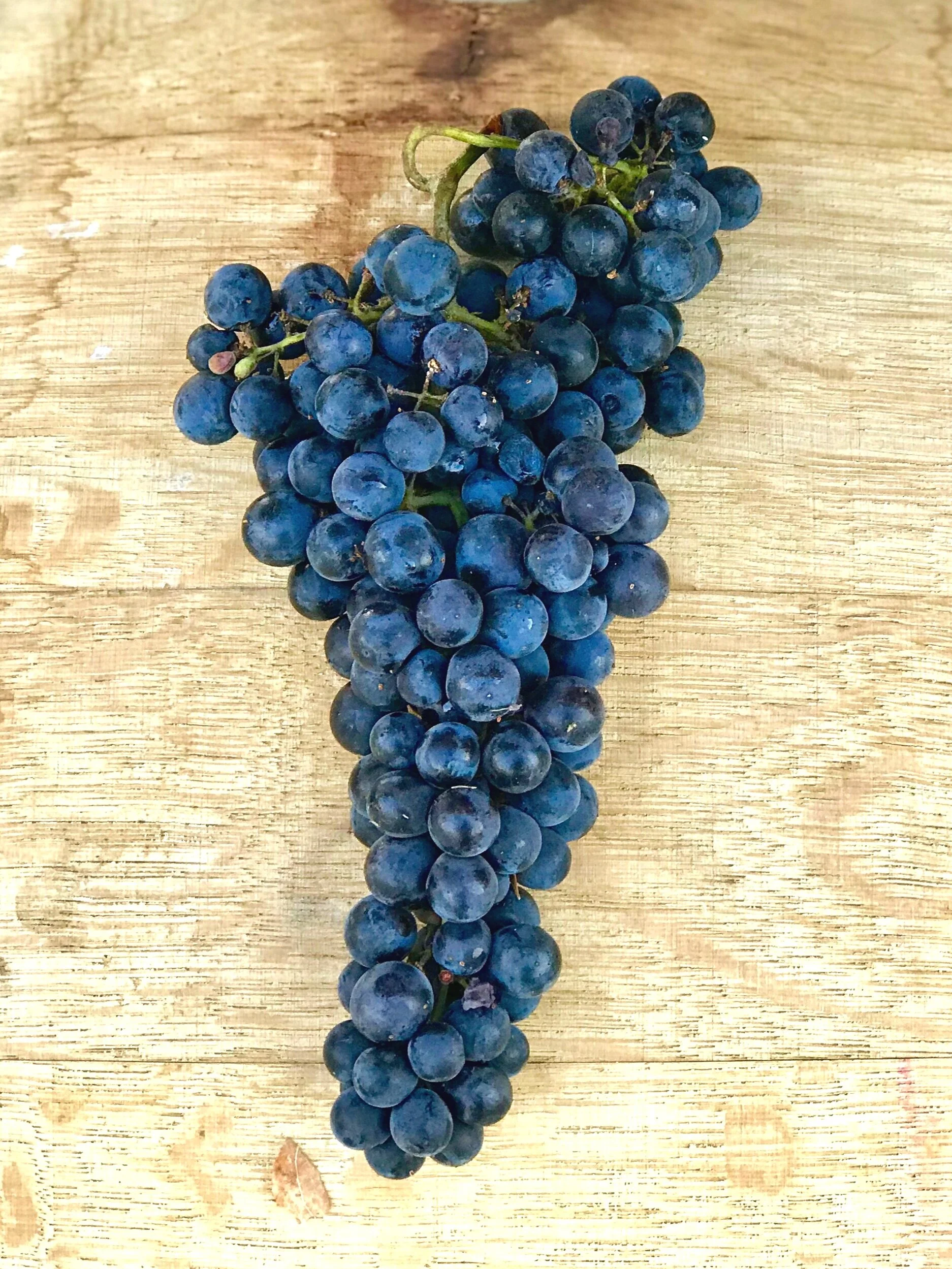
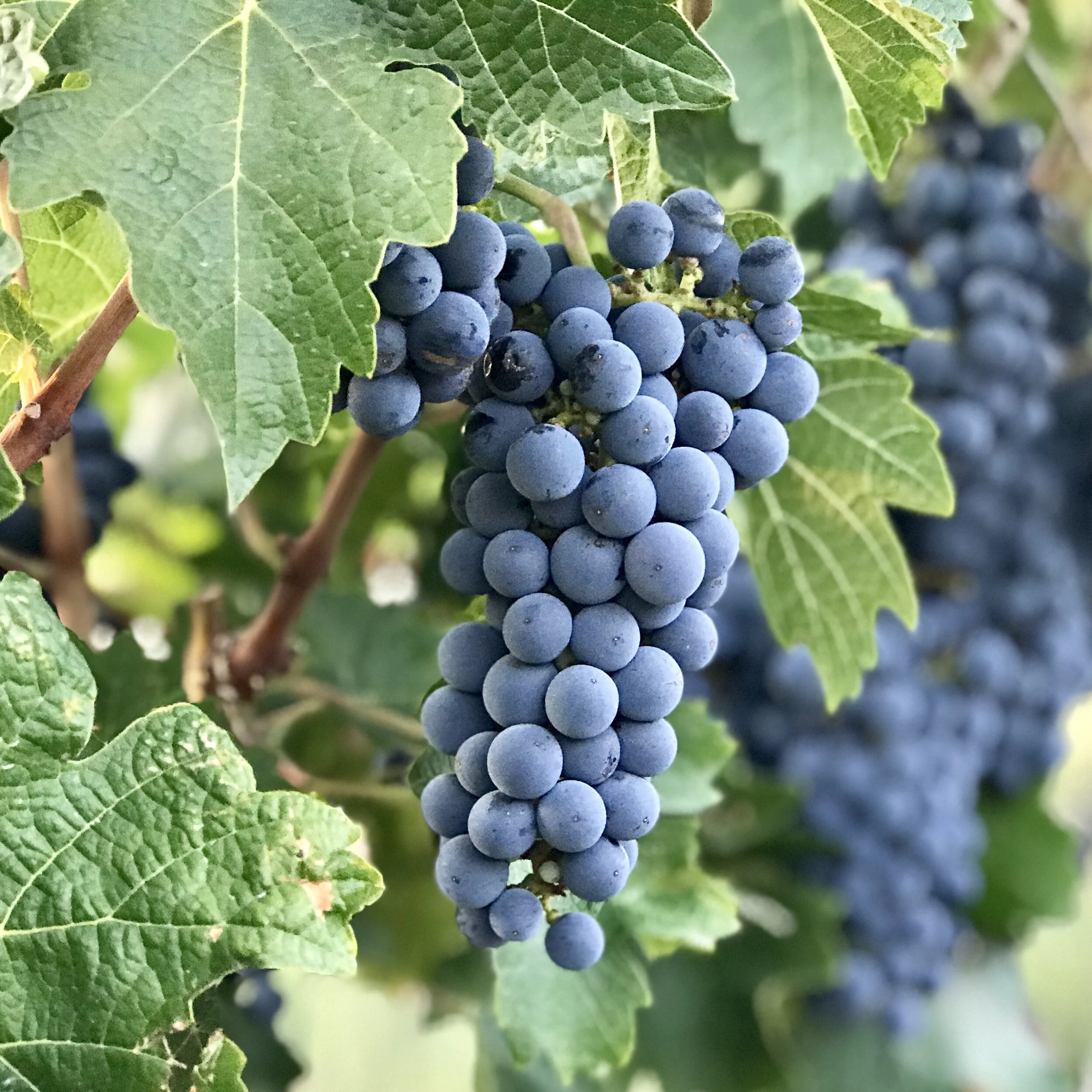
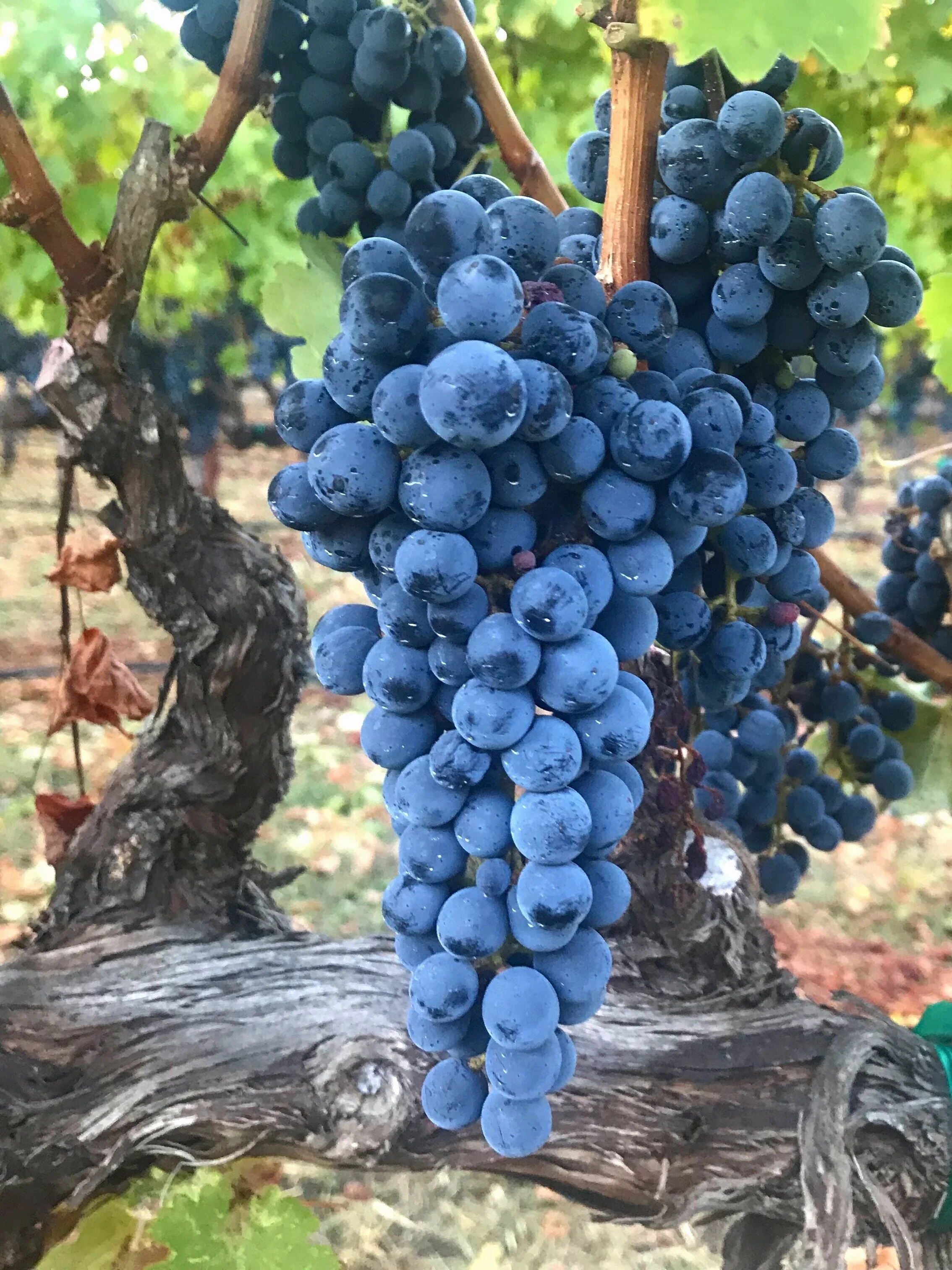
Our Cabernet Sauvignon vineyard overlooking the Yakima Valley
It’s official. We’re contracted for 8000 pounds of Rattlesnake Hills Cabernet Sauvignon. The vines are in their 7th year and sit at 1300 feet elevation in Columbia Valley’s most sought after AVA. Here the immense diurnal shift provides enough heat during the day to fully ripen Cab Sauv while still cooling down more than 40 degrees each night to preserve the fruit’s freshness and acidity. The soils are wind deposited glacial loess on top of Ellensburg formation cobbles. This is the Cab vineyard we’ve been dreaming about. More details forthcoming as the spectacular geology of Eastern Washington deserves it’s own post.
We’ll also go ahead and announce that the Clarksburg Chenin Blanc and Napa Valley Merlot will returning in 2016 as well. These should be available for sale as futures through the website before the start of the 2016 Winemaker Magazine Conference next week.
Frozen Grape Must for sale 2016 - SOLD OUT
Frozen Grape Juice for sale 2016 - SOLD OUT
2016 RATTLESNAKE HILLS IS SOLD OUT, BUT TAKE A LOOK AT OUR CURRENT CABERNET SAUVIGNON FROZEN GRAPE MUST:
Each pail includes 5 gallons of grape must
Product will arrive partially frozen.
Calistoga AVA, Napa Valley, CA
Clone 7:
Brix: 23.5 , pH: 3.95 , TA: 2.8 , YAN: 66 mg/L
Clone 337:
Brix: 23.3 , pH: 3.83 , TA: 2.9 , YAN: 60 mg/L
(Full ETS Lab Report in photos)
Harvested October 13th, 2025
Want to know exactly how to make this Cabernet Sauvignon? From yeast choice to nutrients, oak, and fermentation tips, we’ve put together a step-by-step winemaker’s guide. Read the full guide here.
A Hidden Gem of Northern Napa
Known to insiders as “The Calistoga,” this single-vineyard Cabernet Sauvignon comes from a confidential northern Napa site whose fruit is prized by leading wineries, with finished bottles retailing for up to $170 each. Its reputation for a dark, layered Cabernet with Calistoga power and a mineral spine has made it one of the most sought-after vineyard sources in the valley.
Climate & Vintage Character
Planted in early 2000s on volcanic benchland soils, this vineyard rises between close to 600 feet in elevation. The gravelly and cobbly loam terrain provides perfect drainage while holding a whisper of subsurface moisture from the nearby hills. The result is fruit of remarkable concentration, depth, and natural balance.
Clonal Composition
Two limited blocks are offered this year, each expressing a different facet of the site’s character:
Clone 7 (CS7)
→ Delivers the classic Napa backbone: deep color, cassis, and firm, age-worthy tannins.
Clone 337 (CS337)
→ Brings perfume and precision: violet, plum, graphite, and silky texture.
Together, they form a Cabernet that marries power with finesse, showing dark fruit, cocoa, and a lingering mineral finish emblematic of northern Napa’s volcanic benchlands.
Highlights
Calistoga AVA volcanic benchland terroir
Sustainable, fish-friendly farming practices
Balanced blend of Clone 7 and Clone 337 Cabernet Sauvignon
Cool 2025 vintage with lifted aromatics and refined structure
Single-vineyard Napa fruit sourced from a confidential, world-class site
Photos coming soon — we’re working directly with the vineyard team to provide approved imagery.
Extremely limited. Singular to Calistoga.
Each pail includes five gallons of grape must. Product will arrive partially frozen.
Livermore Valley, California
Brix 25.7, pH 3.7, TA .59
Harvested October 11th, 2019
This vineyard site in the historic Southwestern corner of the Livermore Valley was part of the original Ruby Hill Winery planted in 1885 by John Crellin. The vineyard and winery remained operational through a series of owners and even through Prohibition. More recently the vineyard was leased and managed by Wente who replanted it to Merlot, Cabernet Sauvignon, and Sangiovese in 2000. The Ruby Hill District of Livermore sits at 800 feet elevation and consists mainly of fine, gravelly sand loam, and sedimentary silt loam soils. These soils are very well-draining and average over 50 inches deep. The area is slightly cooler than the rest of the valley and experiences later harvest and longer hang time.The climate of the Livermore Valley is almost exactly the same as that of the St. Helena and Calistoga in the Northern Napa Valley. Morning fog, cold nights, and winds coming off the Bay temper the hot days and allow the grapes to preserve acidity while still achieving ripeness. The Livermore Valley is California's only wine growing region with an East-West orientation.
Each pail includes five gallons of grape must. Product will arrive partially frozen.
The Oak Knoll District of Napa Valley, California
Brix: 22-26, pH: 3.70, TA: .7
Harvested October 27th, 2019
“The District lies at the southern end of the renowned Napa Valley where the growing season is longer—cooler in summer than the warmer Upper Valley and drier in winter allowing soils to warm earlier in the spring. The marine influence from San Pablo Bay is strong here with foggy mornings and cool summer nights. Summer daytime temperatures can average 10°F cooler than St. Helena. This creates the longest growing season in the valley, providing early bud break and a long, leisurely growing season for optimal, balanced ripeness. The cooler nights and slowly rising daytime temperatures create a naturally long hang time for fruit to achieve bright acidity, great texture, fruit-forward aromas and elegant flavors.”
LOW BRIX 2019 Cab Sauv, Oak Knoll (Napa Valley) CA -
Brix: 21, pH: NA (likely lower than 3.7 of the high brix Napa), TA: NA Winemaking: Chaptalize/add sugar, or blend with high brix fruit.
Each pail includes five gallons of grape must. Product will arrive partially frozen.
Knights Valley AVA, Sonoma County, California
Brix: 29.1, pH: 3.93, TA: .52
Harvested October 26th, 2019
This fruit requires an adjustment to make a dry wine! We recommend adding around 2 liters of distilled water and 30 grams of tartaric acid per pail prior to fermentation. Check out our custom winemaking calculator to fine-tune your winemaking.
The Knights Valley separates the northern tip of the Napa Valley from the Southern end of Sonoma’s Alexander Valley. It is the warmest and most rural AVA in Sonoma County. Beringer Vineyards established the region in the late 1960’s and remains the most prominent name in the area alongside the Peter Michael Winery.
The Knights Valley sits at the foot of Mount St. Helena and lays in the original path of the Russian River. The soils here are a unique combination of being both volcanic from the lava flows off St Helena and granitic alluvial from the old river bed. The land appears rocky and cobbled on the surface, but the soils run deep and very well draining.
*Grapes had exposure to smoke. No smoke flavor issues reported with hundreds sold.
Each pail includes five gallons of grape must. Product will arrive partially frozen.
Knights Valley AVA, Sonoma County, California
Brix: 27.9, pH: 3.64, TA: 6.11
Harvested September 29th, 2020
The Knights Valley separates the northern tip of the Napa Valley from the Southern end of Sonoma’s Alexander Valley. It is the warmest and most rural AVA in Sonoma County. Beringer Vineyards established the region in the late 1960’s and remains the most prominent name in the area alongside the Peter Michael Winery.
The Knights Valley sits at the foot of Mount St. Helena and lays in the original path of the Russian River. The soils here are a unique combination of being both volcanic from the lava flows off St Helena and granitic alluvial from the old river bed. The land appears rocky and cobbled on the surface, but the soils run deep and very well draining.
Each pail includes five gallons of grape must. Product will arrive partially frozen.
Rattlesnake Hills AVA, Washington State
Brix: 24.25, pH: 3.51, TA: .7
Harvested October 7th, 2019
The Rattlesnake Hills AVA contains the ideal growing environment for thick-skinned, late-ripening reds like Cabernet Sauvignon. The AVA lies within the larger Yakima Valley AVA, which itself lies inside the much larger Columbia Valley AVA. The Rattlesnake Hills averages 2700 degree days a year which is 500 degree days more than the rest of the Yakima Valley to the west and 100 degree days less than Red Mountain to the East (Bordeaux gets roughly 2500 degree days and Napa gets 2900 degree days). Nighttime temps drop 40+ degrees during the growing season, preserving acidity and freshness. Rain is a seldom occurrence here with the area receiving just 7-10 inches of rain per year.
The Cabernet Sauvignon vines are planted in the Harwood-Burke-Wiehl series silt loams that distinguish the Rattlesnake Hills AVA. These soils are a combination of wind-deposited ancient or sedimentary alluvials and decomposed basalt over a lime-silica hard pan. This combination provides both exceptional drainage and ideal soil alkalinity for growing Vinifera.
Each pail includes five gallons of grape must. Product will arrive partially frozen.
Calistoga AVA of Napa Valley, California
Brix: 24.7, pH: 3.92, TA: .66
Harvested October 9th, 2019
The Calistoga AVA is known for having the highest concentration of volcanic soils and the biggest diurnal shift in the Napa Valley. Some of the most famous Cabernets in California are grown here, including Chateau Montelena, which is located just up the river from the site of our fruit. The vineyard’s proximity to the river results in a combination of volcanic and alluvial granitic soils, which are well-draining and highly infertile, the ideal soil type for growing Cabernet Sauvignon.
Available now — shipping weekly from our Oregon distribution center.
Each pail includes 5 gallons of grape must
Product will arrive partially frozen.
Rutherford AVA, Napa Valley, CA
Brix: 27.4 | pH: 3.92 | TA: 3.6 g/L | YAN: 84 mg/L
ETS report excerpt available in photos, or click here.
Full ETS Analysis: See the complete laboratory results and our analysis of the 2026 must chemistry. View the ETS report & analysis →
Harvested and destemmed: October 5, 2026
2026 Winemaking Guide: See our complete Clone 169 winemaking guide for water-back, acid adjustment, yeast selection, fermentation, oak and aging. Check out the guide →
2026 Rutherford Cabernet Sauvignon
– McGah Family Heritage Vineyard
Situated on Rutherford’s prized eastern bench near the Silverado Trail, McGah Family Heritage Vineyard occupies one of Napa Valley’s most celebrated growing regions. Here, warm afternoon sun, cool evening temperatures, and the appellation’s famous red and brown gravelly loam soils create ideal conditions for Cabernet Sauvignon with remarkable concentration, structure, and balance.
If there is one variety inseparably associated with Rutherford, it is Cabernet Sauvignon. Some of Napa Valley’s most celebrated and age-worthy Cabernets have emerged from this small appellation, where well-drained benchland soils and a long, even growing season have proven exceptionally well suited to the variety.
This Clone 169 Cabernet Sauvignon was planted in 2019, placing the vines at an exciting stage of development for the 2026 harvest. With seven growing seasons behind them, these are established vines—not a newly planted vineyard—yet they remain young enough to offer the vibrant, fruit-driven character that can make Cabernet Sauvignon particularly expressive in its earlier years.
Rather than the tertiary complexity associated with genuinely old vines, the attraction here is purity and intensity of fruit: Cabernet with the potential for generous cassis, blackberry, black cherry, and dark plum, backed by the natural structure and concentration of Rutherford.
The vineyard is farmed by Garvey Vineyard Management, whose meticulous attention to detail and sustainable farming practices have helped establish the McGah family vineyards among Napa Valley’s premier sites. Wines produced from McGah family fruit have earned 100-point scores, reflecting the exceptional quality of both the terroir and the farming.
This is classic Rutherford territory, planted to Cabernet Sauvignon at an age that offers winemakers an exciting combination of established vines, expressive fruit, and serious winemaking potential.
Flavor Profile & Winemaking Potential
Expect a deeply colored Cabernet Sauvignon built around cassis, blackberry, black cherry, and dark plum, with the potential for layers of violet, graphite, cocoa, cedar, tobacco, and warm spice as the wine develops.
Clone 169 is a respected Cabernet Sauvignon selection capable of producing concentrated, structured wines with excellent color and dark-fruit character. Combined with Rutherford’s warm days, cool evenings, and well-drained benchland soils, this fruit offers the raw material for a Cabernet that emphasizes ripe fruit, concentration, freshness, and structure.
Made on its own, it has the potential to produce a beautifully fruit-driven Rutherford Cabernet Sauvignon with the tannin and balance necessary for development in the cellar.
It also opens up tremendous possibilities at the blending bench.
Merlot can add softness and breadth. Malbec can contribute plush dark fruit and floral character. Tannat offers another level of fruit expression, aromatics, color, and structure, while Petit Verdot can bring additional depth, spice, color, and tannin.
For winemakers interested in exploring Cabernet itself, this Clone 169 can also be blended with Cabernet Sauvignon from other nearby plantings and different clones, including older vines. Combining Cabernet from different clones and vine ages offers an opportunity to build additional layers of aroma, fruit, structure, and complexity while still keeping Cabernet Sauvignon at the center of the finished wine.
Whether bottled as a single-clone Rutherford Cabernet, incorporated into a Bordeaux-style blend, or combined with other Cabernet selections to create a custom cuvée, this fruit gives the winemaker an exceptional foundation to work from.
Why Rutherford Matters
Although Rutherford is one of Napa Valley’s smaller American Viticultural Areas (AVAs), it has long been regarded as one of the world’s premier regions for Bordeaux varieties. Its combination of warm afternoons, cool evenings, and exceptionally well-drained gravelly bench soils consistently produces fruit with remarkable concentration, natural balance, and refined structure.
The appellation is famous for wines possessing both power and elegance—ripe fruit supported by vibrant acidity, silky tannins, and the distinctive mineral complexity often associated with Rutherford’s historic bench vineyards.
Highlights
• Vineyard: McGah Family Heritage Vineyard
• Appellation: Rutherford AVA, Napa Valley
• Varietal: Cabernet Sauvignon
• Clone: 169
• Rootstock: 039-16
• Planted: 2019
• Vine Age at 2026 Harvest: Seven growing seasons
• Farming: Sustainably farmed by Garvey Vineyard Management
• Flavor Potential: Cassis, blackberry, black cherry, dark plum, violet, graphite, cocoa, cedar, tobacco, warm spice, and a long, structured finish
• Winemaking Potential: Excellent as a fruit-driven varietal Cabernet, the foundation of a Bordeaux-style blend, or as a component in a multi-clone Cabernet Sauvignon cuvée
• Blending Potential: Particularly compelling alongside Merlot, Malbec, Tannat, Petit Verdot, or Cabernet Sauvignon from other clones and vine ages
• Vineyard Pedigree: Wines produced from McGah Family vineyards have earned 100-point scores
Farming Practices
Weed Management
☐ No herbicides used
☑ Limited herbicide use (typically one targeted application per season)
☐ Mechanical weed control only
☐ Information not available
Extremely limited. A rare opportunity to craft Rutherford Cabernet Sauvignon from one of Napa Valley’s most respected family vineyard estates.
Shipping & availability
Available now and shipping weekly from our Oregon distribution center. See our current shipping and delivery details for order cutoffs and delivery options.
Provenance Note
This product is made from fruit sourced from McGah Family Heritage Vineyard in Rutherford, Napa Valley. The vineyard name is used solely to identify the factual origin of the fruit and does not imply endorsement, sponsorship, or affiliation with the vineyard owner.